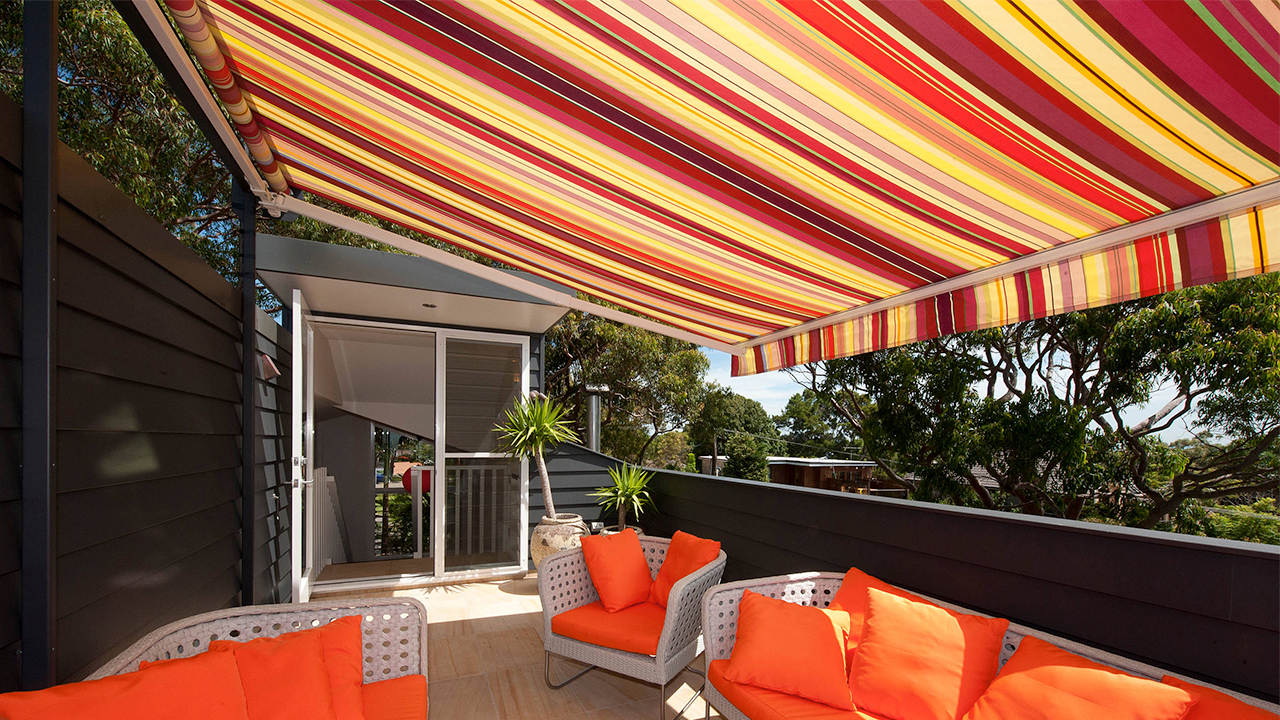
Roof deck retractable awning
Retractable awnings are useful investments that can improve the quality and usability of outdoor spaces. For commercial and residential properties they can help to increase the appeal of the place by providing calibrated control over the amount of direct sunlight that can penetrate to the space. This also provides an added layer of flexibility with regards on multi-usage of the space at different times of the day.
Instead of building an extra room to extend your property, they provide you with the option of shading your outdoor space completely. Installing retractable awnings brings about significant savings relative to construction works.
With 15 years of experience in the local awning industry, we provide high quality lateral arm awnings that are sure to suit various preferences and needs. Our products are of superior quality that exude functional and aesthetic appeal.

Modern commercial awning

Designed for outdoor spaces
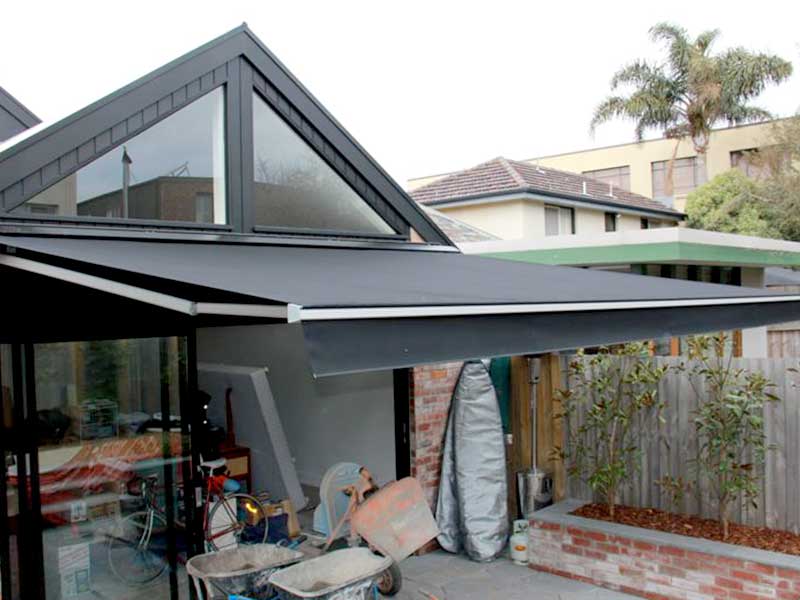
Simple porch awning
Information
We offer both manual and motorised retractable awning options to suit different needs and budgets. Manual awnings operate using a hand crank, allowing you to extend or retract the fabric with simple mechanical control. Motorised awnings, on the other hand, run on an electric system and can be operated using a wall switch or remote control. Many customers prefer a setup that includes both systems, where the manual crank acts as a backup in the event of a power failure or motor issue. This dual option provides peace of mind and ensures the awning remains usable in all situations.
In terms of structure, lateral arm awnings are typically mounted onto a wall or roof surface and require adequate clearance for proper operation. As a general guide, at least six inches of horizontal space is needed, along with a vertical clearance of around seven feet, especially if the awning is installed at a steeper pitch. One practical advantage of this design is that it does not require ground supports. The retractable arms keep the fabric tensioned, eliminating the need for poles or columns that may obstruct the space below.
The awning’s torsion bar plays an important role in maintaining stability. Made from either steel or aluminium, it absorbs movement and vibration during operation. Steel torsion bars are generally stronger and can support wider fabric spans without centre support, making them suitable for larger installations where durability is a priority.
Manual and Automatic options
We provide two basic options for our retractable awning products, namely the manual and automatic options. The manual awning uses a crank to extend or retract the fabric while the motorised option does so mechanically via a remote or switch. An ideal set up would be for an awning to have both capabilities – the manual crank-operated one will serve as a backup when the motorised one fails or lacks sufficient power to operate.
Structure and Design
Lateral arm awnings are commonly mounted to the wall or roof of a property, with at least six inches of free space required for operation. A vertical allowance of around seven feet is also recommended if the awning unit is pitched vertically.
An advantage of the awning unit is that it does not require ground support, as the unit’s arms will keep the fabric taut without the need for lateral support or standing poles. The torsion bar, made in steel or aluminium, works by absorbing movement and shock that runs through the unit.
Typically, the steel torsion can hold a greater amount of load than aluminium, including holding a wider span of fabric without any center support due to its superior strength to aluminium.

Details of awning components

Construction and structure

Design for landed residential property
Awning Maintenance
Awnings are generally low maintenance fixtures, but practicing proper awning care and maintenance help keep your new awning in good working order for a long time to come:
- Retractable awnings should be rolled up when stormy conditions are anticipated.
- Water or rainwater should never be allowed to pool on the awning. Folding arm awnings are designed to be used as a sun shelter in calm conditions.
- No external objects should be attached to, or hung from the awning or fabric.
- Powder coated metallic components and profiles of your awning should be cleaned twice a year by washing it with soap and rinse off.
- Lubricate moving components annually with light oil and apply sparingly. Do not apply it on the fabric of the awning as it may stain permanently.
- To remove dirt from the fabric, brush dry fabric with a soft brush and remember to never scrub the fabric.
- Immediately remove deposits of organic matter (such as soil, grass cuttings, leaf litter, bird droppings, vehicle exhaust), some leaf species can cause stains if wet, remove leaves before rolling up awning.
- Do not use strong bleaches such as pool chlorine or any soaps, detergents, solvents or other liquid cleansers to clean the fabric.
Planning shade around daily use
Start with the part of the outdoor area you actually use. A dining table, entrance or seating corner may need coverage at a particular time rather than across the whole day. Note where the afternoon sun reaches, how far the furniture sits from the wall and whether doors must open beneath the extended awning. These details help establish a useful projection and mounting position before colours or controls are selected.
Think about the space with the awning both open and closed. The installation should allow convenient access and avoid interfering with nearby lights, windows or roof drainage. Measurements taken at ground level are only a starting point: the mounting surface, available headroom and proposed pitch need assessment together. Existing walls and finishes also influence how the system can be secured.
Choosing operation and fabric
A manual crank can be practical when the awning is easy to reach and adjusted occasionally. For a frequently used terrace, our motorised retractable awnings page explains the convenience of switch or remote operation. Ask which controls and backup arrangements are available for the proposed model, rather than assuming every motorised system includes the same features. Decide who will operate it and where controls should be accessible.
Fabric choice affects the appearance of the frontage as well as the shade beneath it. Compare samples alongside the existing wall colour and consider how the underside will look from the seating area. If you already have a serviceable frame, awning fabric replacement may be worth discussing before choosing a complete replacement. A fabric change should follow a check of the arms, fixings and operating mechanism.
Using the awning responsibly
Singapore experiences thunderstorms with heavy rain and strong winds; the Meteorological Service Singapore weather guide explains these local conditions. Treat a folding-arm awning as adjustable sun shade and follow the operating limits provided for the installed system. Keep the crank or control accessible so you can retract it promptly when conditions change.
Do not force an awning that sticks, moves unevenly or makes an unfamiliar noise. Stop operating it and arrange an awning repair assessment. Early information about the symptoms, system age and any visible fabric damage helps us understand what needs checking.
Frequently Asked Questions
| Question | Answer |
|---|---|
Should I choose a manual or motorised retractable awning? | Manual awnings use a hand crank; motorised ones use a wall switch or remote. Many customers choose both, with the manual crank as backup if the motor fails. |
How much clearance does a retractable awning need? | At least six inches of horizontal space, and around seven feet of vertical clearance if installed at a steeper pitch. |
Do retractable awnings need ground support poles? | No, the retractable arms keep the fabric tensioned without needing poles or columns underneath. |
What's the difference between steel and aluminium torsion bars? | Steel torsion bars are generally stronger and can support wider fabric spans without centre support, compared to aluminium. |
How should I maintain my retractable awning? | Roll it up in stormy weather, avoid pooling water or hanging objects on it, clean powder-coated parts twice a year, lubricate moving parts annually, and never use bleach or strong detergents on the fabric. |