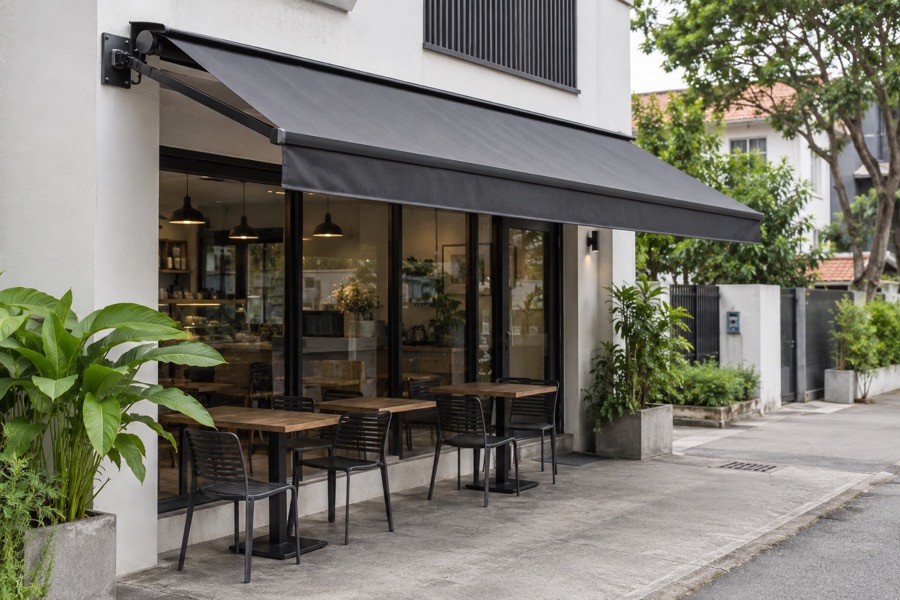
Café frontage awning
A well-planned awning makes a business frontage more welcoming and helps customers use outdoor areas comfortably. Ace Awnings supplies shading solutions for commercial properties in Singapore, including shopfronts, restaurants and other customer-facing spaces. With 15 years of experience in the awning industry, we help businesses choose a practical balance of coverage, appearance and everyday operation.
Different premises need different solutions. A restaurant may want adjustable shade over outdoor seating, while a retail entrance may benefit from a fixed canopy that defines the doorway. The right choice starts with understanding the space and how people move through it.
We discuss your preferred design, fabric and controls alongside the available mounting positions. This helps the proposed awning complement the premises while providing useful shade where your customers and staff need it.
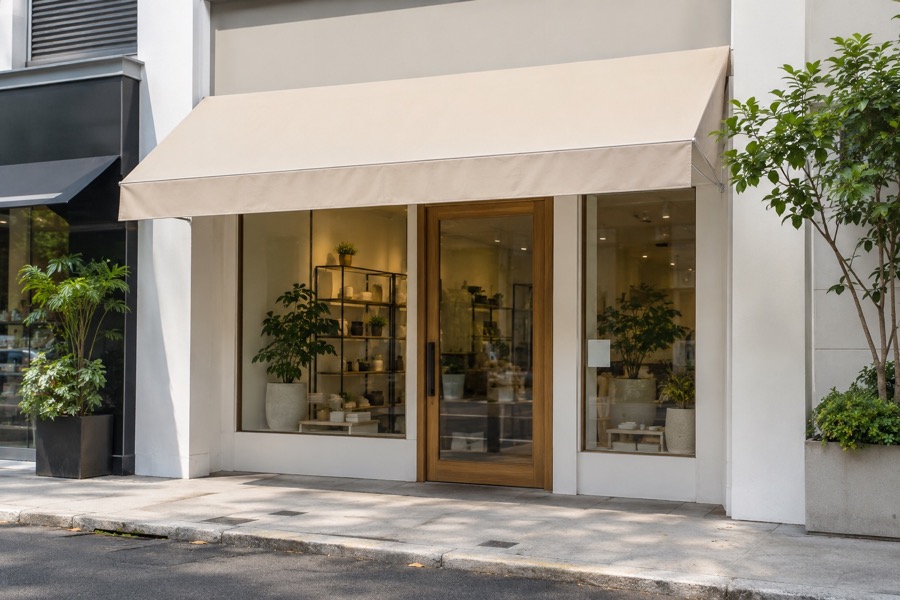
Retail entrance canopy
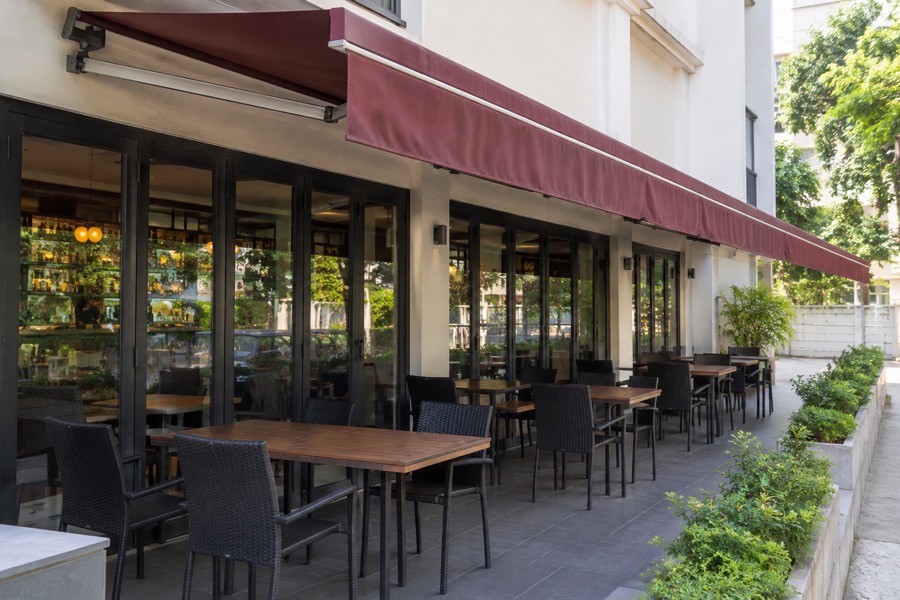
Outdoor dining shade
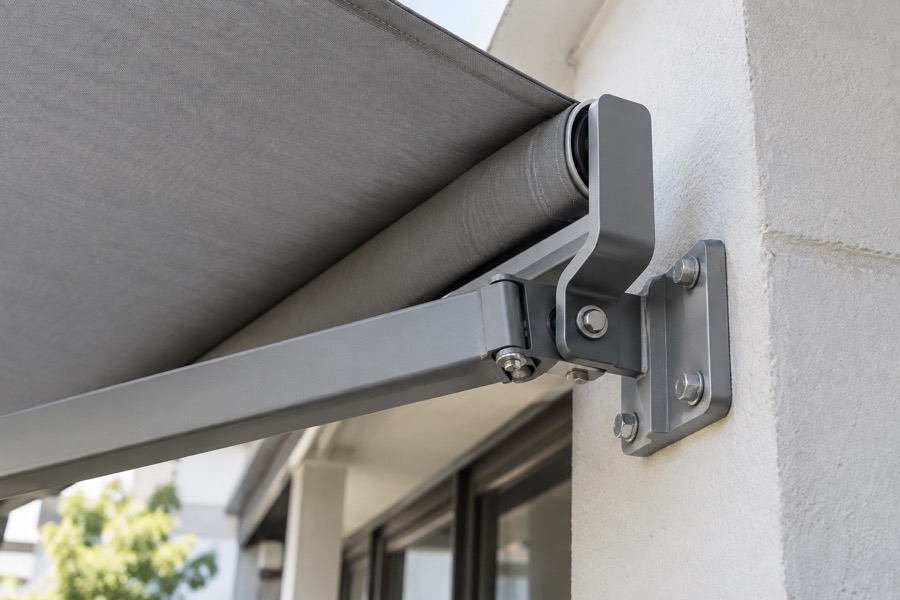
Awning mounting bracket
Choosing Shade for Your Business
Start with the area you want to cover and its busiest hours. An entrance canopy, shopfront awning and dining-area shade may look similar from the street, but each serves a different purpose. Consider where the sun falls, whether customers queue outside and how much room must remain clear for movement. These details help determine the coverage and operating method.
For outdoor dining, shade should work with the seating layout rather than simply cover the largest possible area. Tables, service routes, doors and neighbouring premises all affect the design. An awning should also be considered alongside the existing building, including the condition of the mounting surface and the practical access needed for installation.
Retractable Awnings or Fixed Canopies
A retractable awning allows you to extend fabric when shade is needed and open the space when conditions are suitable. Manual and motorised operation offer different ways to manage this throughout the working day. Folding-arm systems are intended for sun shelter in calm conditions and should be retracted when stormy weather is expected.
An outdoor canopy provides a fixed visual feature and can suit entrances or defined seating areas. Its shape, frame and fabric should be chosen for the particular frontage. Fixed coverage and retractable shade have different limitations, so the selection should reflect the intended use rather than appearance alone.
Appearance, Fabric and Branding
Fabric colour and canopy shape can help the shade feel like part of your business. Ace’s canopy options can incorporate a business name, subject to the selected design. Discuss the wording, position and legibility before finalising the fabric so the result remains clear without overwhelming the frontage.
Fabric choices should also account for daylight, glare and the level of enclosure you want. Some spaces benefit from lighter surroundings, while others need stronger shade. Ask about suitable materials, cleaning requirements and available finishes for your particular installation rather than assuming every fabric performs the same way.
Planning Installation and Daily Use
A useful enquiry includes photographs of the frontage, approximate dimensions and a description of the area to be shaded. Identify any doors, signage or other fittings near the proposed awning. During the site survey, discuss access, mounting positions and how the system will be used by staff. Confirm the agreed installation arrangements and any property-management requirements before work begins.
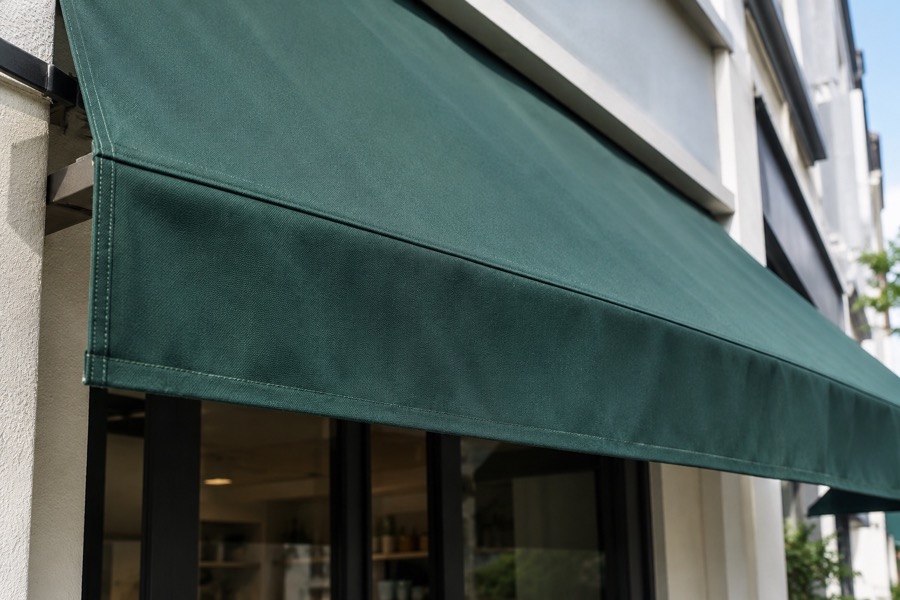
Canopy fabric detail
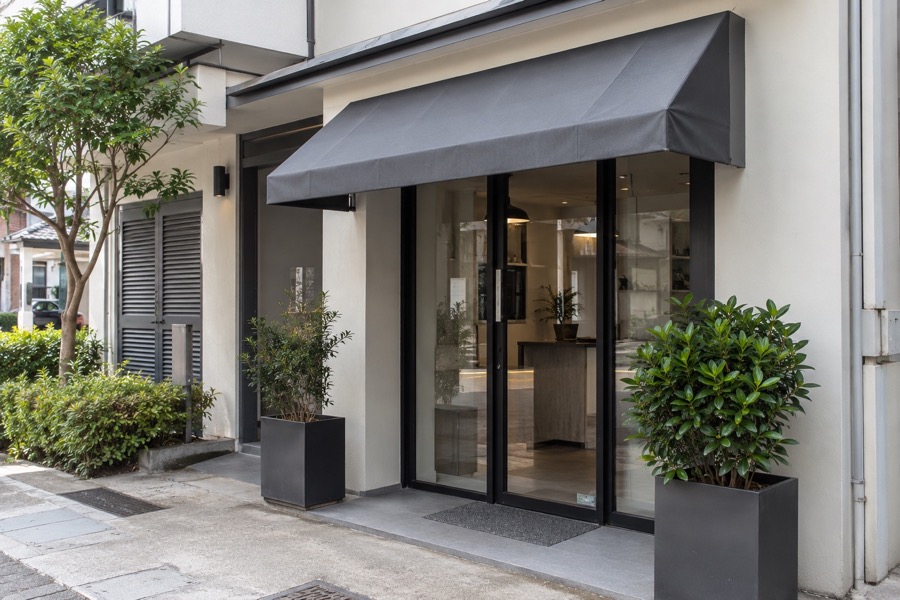
Shop entrance canopy
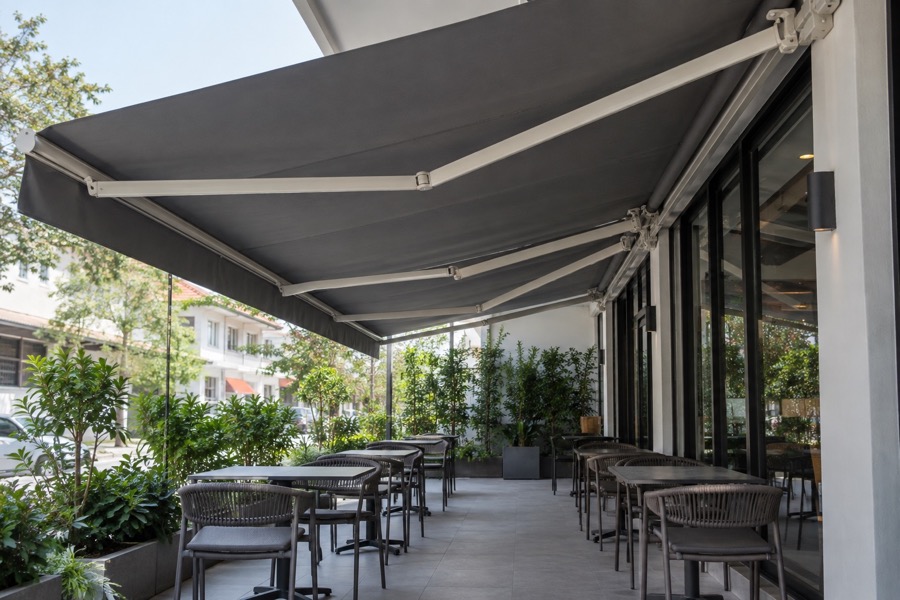
Folding-arm awning structure
Looking After a Commercial Awning
Daily use is easier when staff understand the controls and the limitations of the installed system. Keep operating instructions accessible and agree who will retract a fabric awning when conditions change. A motorised control offers convenience, but it does not remove the need to use the shade appropriately.
- Keep the operating area clear of doors, signage and items that could obstruct movement.
- Retract folding-arm awnings before stormy conditions and avoid allowing rainwater to pool on the fabric.
- Remove leaves and other loose debris before rolling up the awning.
- Follow the supplied cleaning guidance for the chosen fabric and frame finish.
- Do not hang decorations, equipment or other loads from the awning.
- Arrange an assessment if the system develops unusual noise, uneven movement or visible damage.
When requesting an estimate, describe the business type, opening pattern and intended shade coverage. Clear project information helps us discuss a suitable system and quotation. It also allows you to compare the proposed scope with your operational needs before deciding on the installation.
Where an awning serves outdoor dining, review URA’s outdoor refreshment area guidance for location-specific requirements. Compare our outdoor canopy and retractable awning options according to how the frontage will be used.
Frequently Asked Questions
| Question | Answer |
|---|---|
Should I choose a manual or motorised retractable awning? | Manual awnings use a hand crank; motorised ones use a wall switch or remote. Many customers choose both, with the manual crank as backup if the motor fails. |
How much clearance does a retractable awning need? | At least six inches of horizontal space, and around seven feet of vertical clearance if installed at a steeper pitch. |
Do retractable awnings need ground support poles? | No, the retractable arms keep the fabric tensioned without needing poles or columns underneath. |
What's the difference between steel and aluminium torsion bars? | Steel torsion bars are generally stronger and can support wider fabric spans without centre support, compared to aluminium. |
How should I maintain my retractable awning? | Roll it up in stormy weather, avoid pooling water or hanging objects on it, clean powder-coated parts twice a year, lubricate moving parts annually, and never use bleach or strong detergents on the fabric. |