
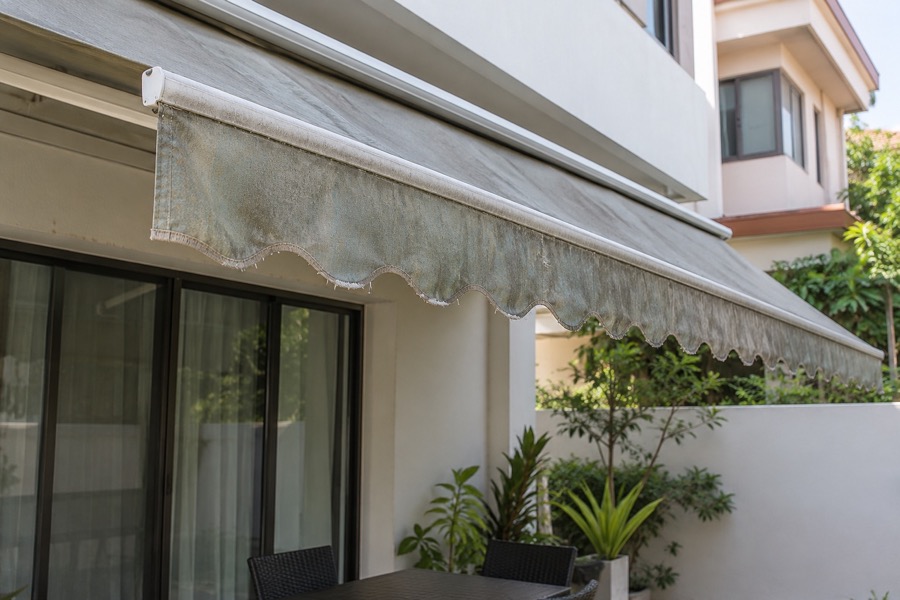
Worn retractable awning fabric
An awning that no longer operates smoothly or shows visible damage should be assessed before the problem becomes harder to manage. The appropriate repair depends on the system, its condition and the parts affected. Ace Awnings provides awning repair services in Singapore, supported by 15 years of experience in the awning industry.
Some issues concern the fabric or an operating component, while others may involve the frame or mounting arrangement. Understanding the cause helps distinguish a suitable repair from work that would only hide the symptoms.
Share photographs and describe what has changed when making an enquiry. We can discuss an assessment and explain the practical next steps for your awning. Repair suitability should be confirmed for the actual installation rather than assumed from the appearance of the damage alone.
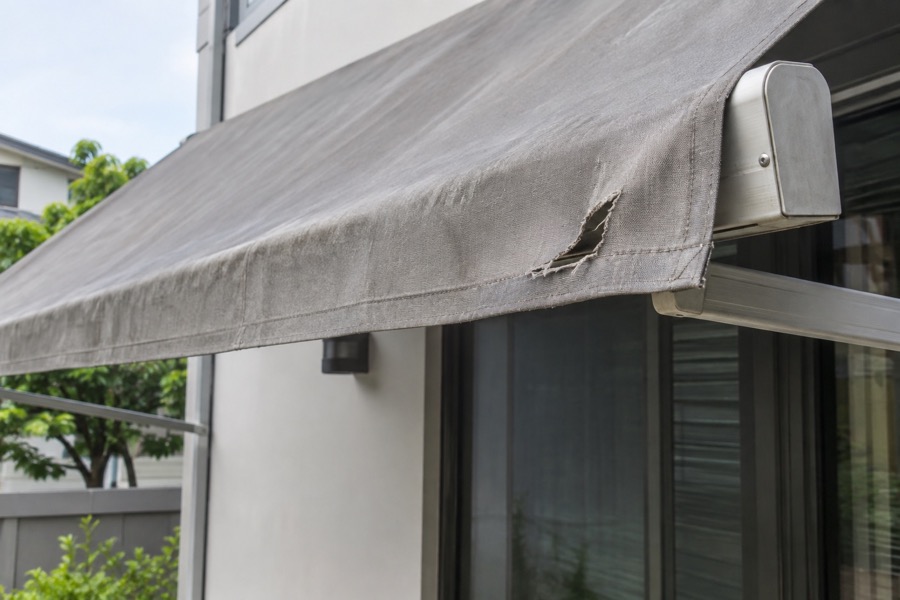
Small tear in awning fabric
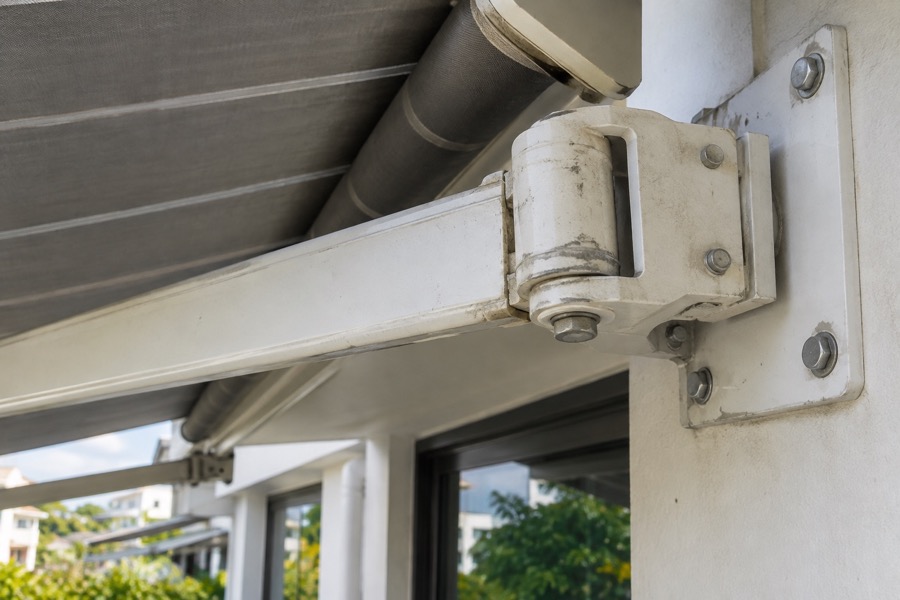
Folding-arm awning joint
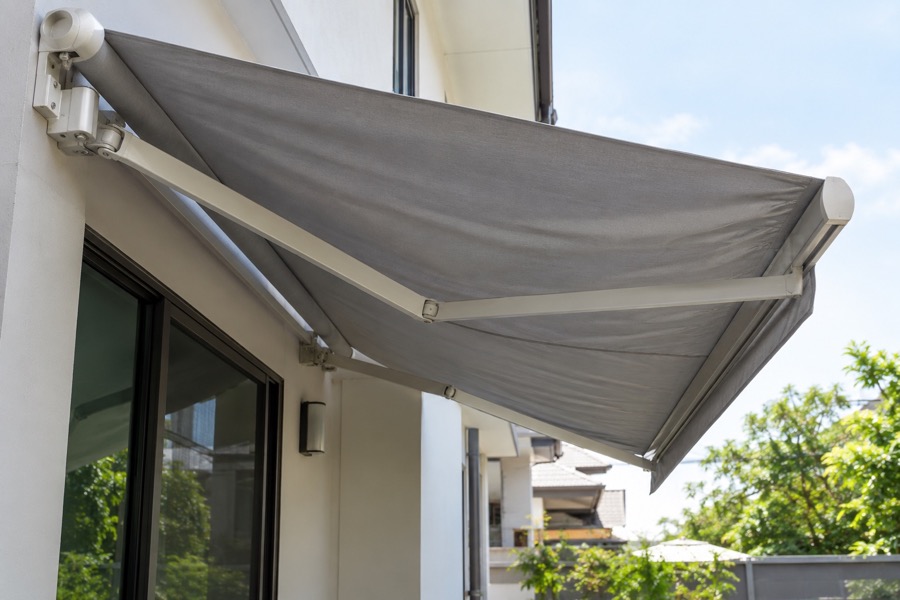
Uneven awning fabric tension
When to Request an Assessment
Uneven movement, unusual noise, difficulty opening or closing and visible fabric damage are useful reasons to seek advice. A system that catches or needs increasing force should not simply be operated harder. Note whether the issue happens throughout the movement or only near a particular position, and whether it followed a weather event or other incident.
Check the system visually from a safe position without dismantling it. Photographs of the full awning and the affected area help explain the problem. If you know the model or have the original installation records, include those details. They can help identify the system and the components that may need attention during assessment.
Fabric and Operating Components
Fabric wear and mechanical faults require different responses. A torn, stained or deteriorated cover may need assessment of whether local work or replacement is appropriate. The fabric condition should be considered alongside the frame and operating system. New material alone will not resolve worn arms or unsuitable mounting.
For manual awnings, describe any change in the crank operation or the way the fabric extends. For a motorised system, explain what happens when the control is used and whether the movement stops or becomes uneven. Electrical and motor work should be assessed appropriately; do not open the mechanism or alter wiring as part of a home inspection.
Repair or Replacement
A repair can be sensible when the affected component can be addressed and the remaining installation is suitable for continued use. More extensive deterioration may make replacement worth considering. Parts availability, compatibility and the condition of the supporting structure all influence the decision. These points should be explained before you agree to the work.
Where fabric is the main issue, contact Ace to discuss the condition of the cover and existing mechanism. If a new system is being considered, our Retractable Awning page explains the basic installation options. The choice should follow an assessment rather than a general assumption that repair is always cheaper.
Preparing for the Repair Visit
Provide the property location, photographs, approximate awning size and a description of the fault. Mention the operating type and any known history of earlier repairs. Identify access restrictions and nearby fittings so that the visit can be discussed realistically. Confirm whether your particular system and repair scope can be handled before making arrangements.
The agreed quotation should identify the affected work, proposed components and any limitations found during assessment. Ask what will be checked following the repair and how the system should be used afterwards. Clear scope matters especially when several components are worn, because work on one part may not address every issue in an older installation.
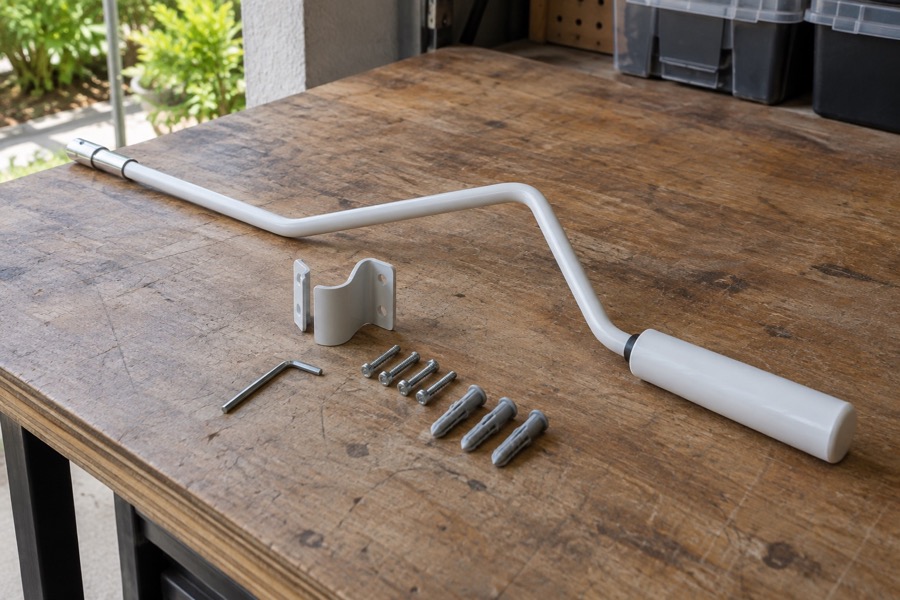
Manual awning crank and hardware
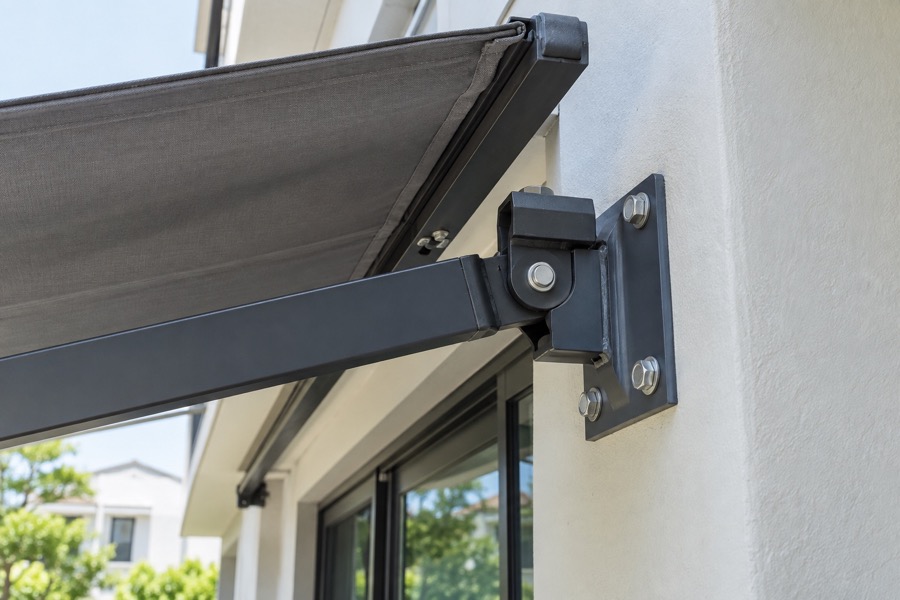
Awning wall bracket fixings
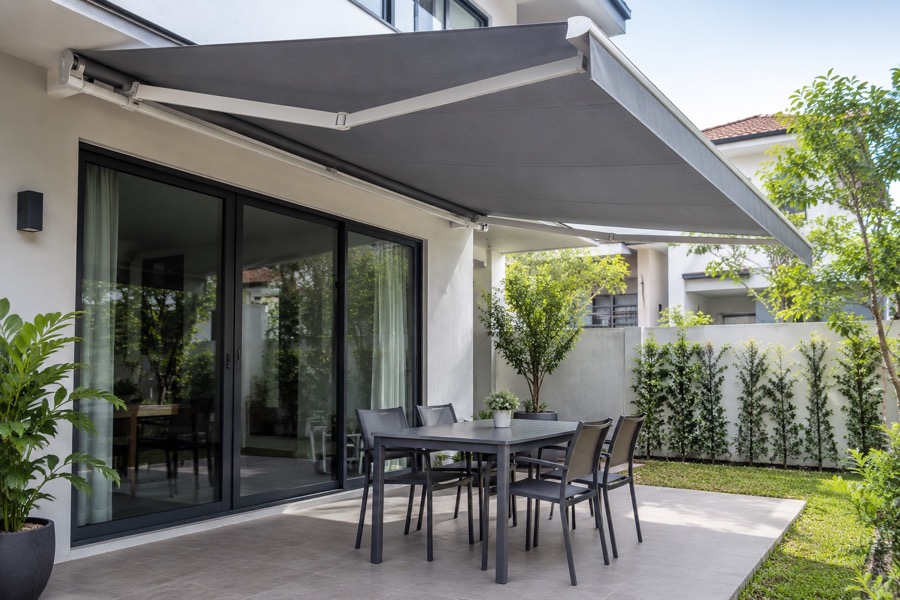
Aligned awning and renewed fabric
Care After an Awning Repair
Once the repair is completed, follow the instructions relevant to the installed system and repaired components. Suitable use helps avoid repeat damage, but it does not remove the need to monitor an older awning. Keep the repair record and note any recommended follow-up attention.
- Operate the awning as demonstrated and keep the travel area clear.
- Retract folding-arm fabric awnings before stormy conditions.
- Prevent rainwater pooling and avoid hanging objects from the fabric or frame.
- Remove loose leaves and debris before rolling up the cover.
- Follow the appropriate cleaning guidance for the fabric and coated components.
- Stop forcing the system if the repaired fault returns or movement changes again.
If you notice a further problem, describe when it occurs and provide photographs where possible. This helps distinguish a recurrence from an unrelated issue. Ask for advice before applying oils, cleaners or improvised adjustments, since a method appropriate for one component may be unsuitable for another part of the awning.
Weather exposure is relevant when describing damage; MSS’s weather systems guide explains Singapore’s thunderstorm conditions. If the frame remains suitable, discuss fabric replacement; for operating-system choices, see motorised retractable awnings.
Frequently Asked Questions
| Question | Answer |
|---|---|
Should I choose a manual or motorised retractable awning? | Manual awnings use a hand crank; motorised ones use a wall switch or remote. Many customers choose both, with the manual crank as backup if the motor fails. |
How much clearance does a retractable awning need? | At least six inches of horizontal space, and around seven feet of vertical clearance if installed at a steeper pitch. |
Do retractable awnings need ground support poles? | No, the retractable arms keep the fabric tensioned without needing poles or columns underneath. |
What's the difference between steel and aluminium torsion bars? | Steel torsion bars are generally stronger and can support wider fabric spans without centre support, compared to aluminium. |
How should I maintain my retractable awning? | Roll it up in stormy weather, avoid pooling water or hanging objects on it, clean powder-coated parts twice a year, lubricate moving parts annually, and never use bleach or strong detergents on the fabric. |