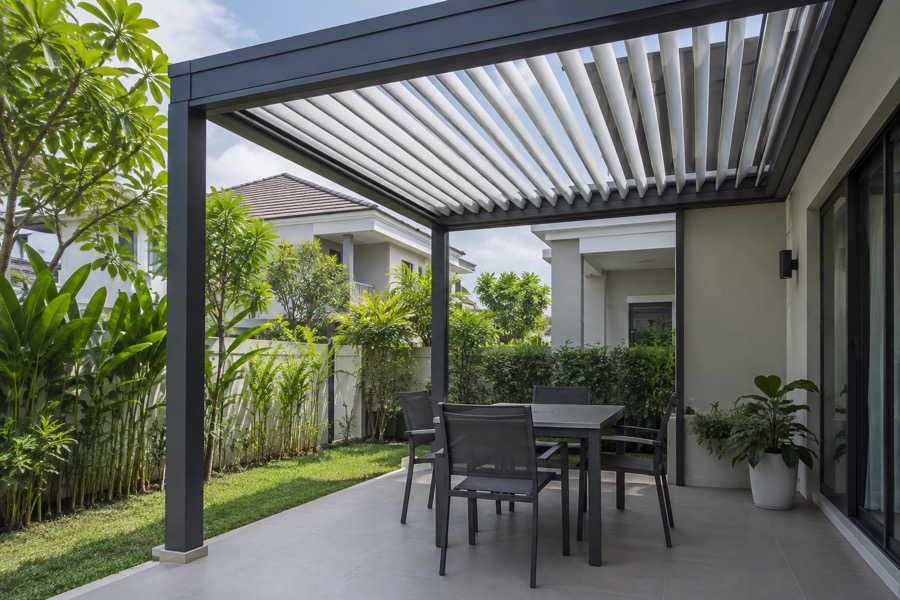
Patio motorised louvres
Motorised louvres provide adjustable shade by changing the position of the louvre elements through an operating system. They offer an alternative to a fixed roof or fabric awning when the ability to vary overhead shading is important. Ace Awnings includes motorised louvres among its outdoor shading solutions in Singapore.
With 15 years of experience in the awning industry, we work with property owners to understand the space, intended use and preferred appearance. The right solution depends on the supporting structure and the actual system available for your project.
Before choosing a design, discuss how you want the area to feel throughout the day. Adjustable shade, access to daylight and the position of nearby buildings all influence whether a motorised louvre arrangement is suitable for the site.
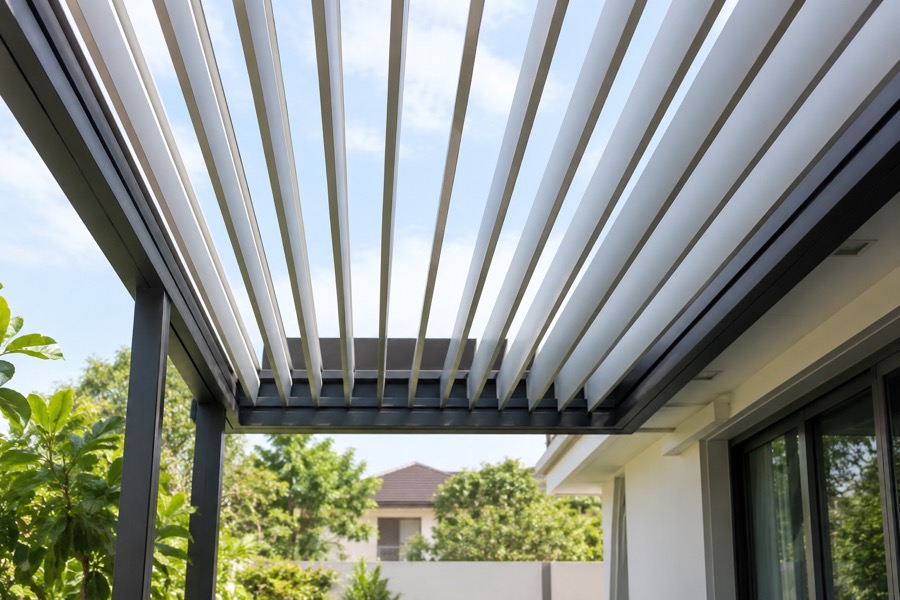
Adjustable louvre roof underside
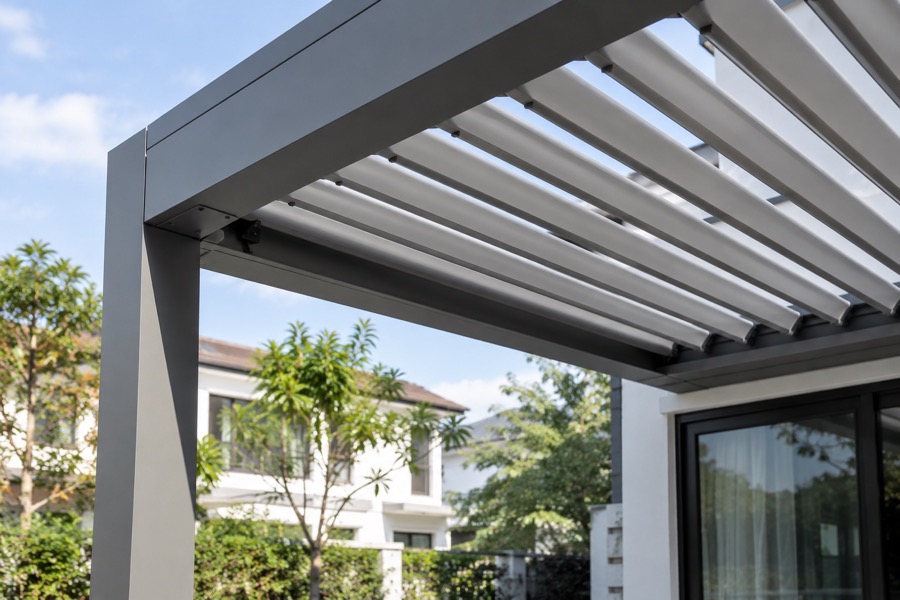
Louvre pivot and roof edge
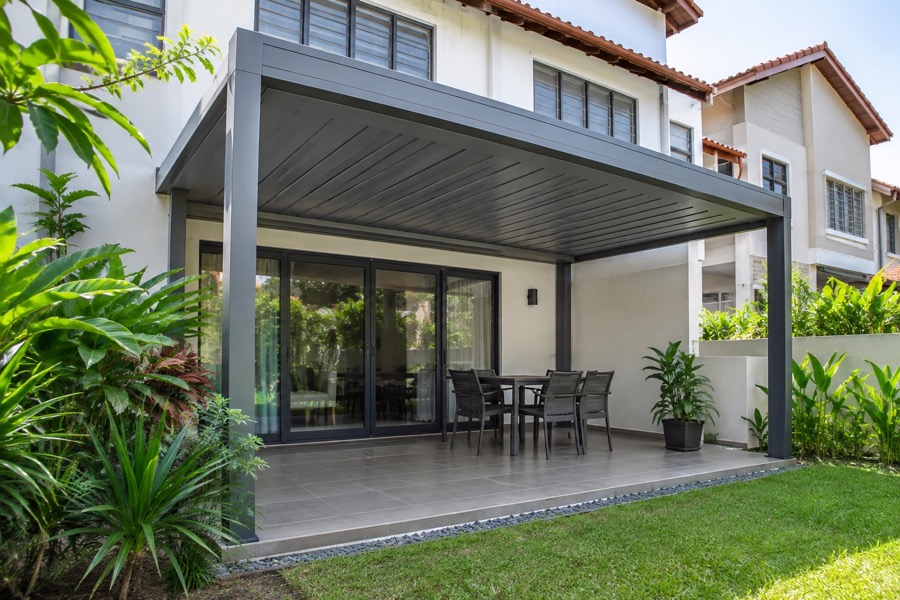
Closed patio louvre roof
How Adjustable Louvres Fit Your Space
A louvre arrangement uses repeated elements to manage the relationship between open space and shade. Motorised operation allows their position to be adjusted through the selected controls. The movement, opening range and coverage depend on the specified product, so these details should be confirmed rather than assumed from photographs of another installation.
Consider when the outdoor area is used and where direct sunlight causes discomfort. A dining space may need afternoon shade, while another area may benefit from more daylight at particular times. The aim is to match the system to those practical needs. The shade should also work with existing doors, windows and circulation around the property.
Design and Supporting Structure
The supporting frame and mounting conditions are central to the proposal. Site dimensions, available fixing positions and surrounding building features influence the arrangement. An attractive overhead design still needs a suitable installation location and enough room for the specified movement. Ace’s site survey allows these conditions to be considered alongside your appearance preferences.
Discuss the finish, alignment and relationship with the existing building before confirming the design. Identify whether you need a new supporting structure or are hoping to use an existing one; suitability must be assessed. A motorised louvre product should not be described as a complete pergola system unless that is the actual scope being supplied.
Controls and Operating Expectations
Motorised controls should be selected around everyday use. Ask how the system operates, where the controls will be positioned and what power provision is required. Confirm the instructions for interruption of power and any alternative operating arrangements included with your chosen product. Smart-home connections or automatic sensors should only be expected when specifically included.
Weather performance also belongs in the specification discussion. Louvre systems differ in their closure, drainage and operating limitations. Ask what the proposed model is designed to do and how it should be used in changing conditions. Adjustable overhead shade does not, by itself, establish complete rain protection or a particular wind rating.
Comparing Other Shade Options
A retractable fabric awning offers a different form of adjustable shade, while a polycarbonate roof provides fixed coverage with daylight transmission. These products should be compared according to the site’s needs, available space and intended use. Their installation details and care requirements are different.
For an estimate, share photographs, approximate dimensions and a description of your preferred use of the area. Include nearby roofs, walls and openings in the photographs. During consultation, confirm the product, supporting structure, controls, installation scope and any property-management arrangements relevant to the project before agreeing to proceed.
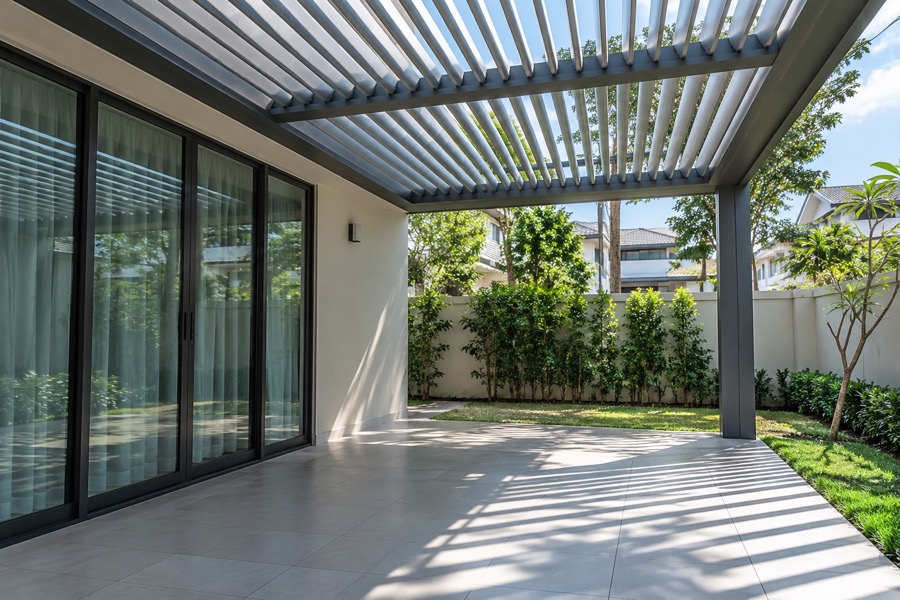
Daylight through open louvres
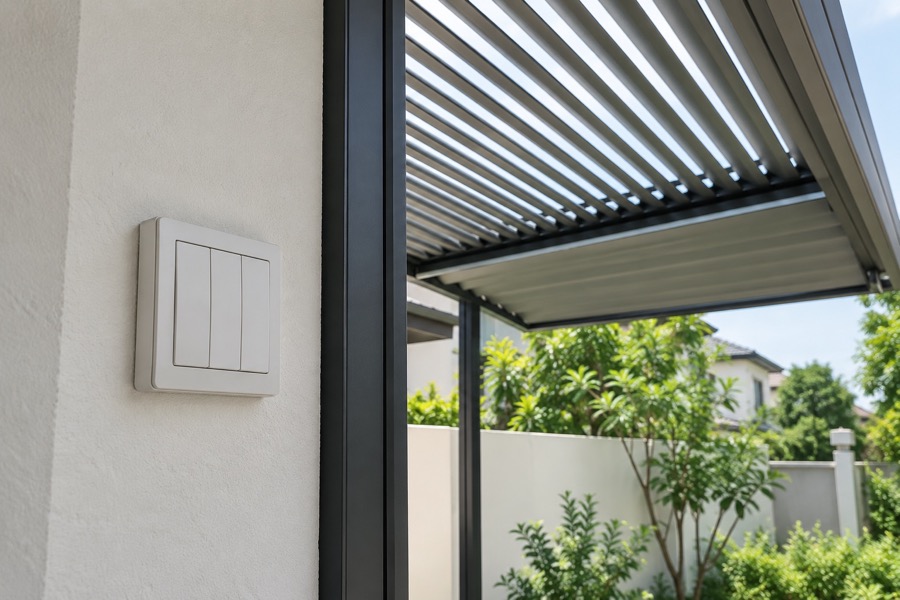
Louvre control switch
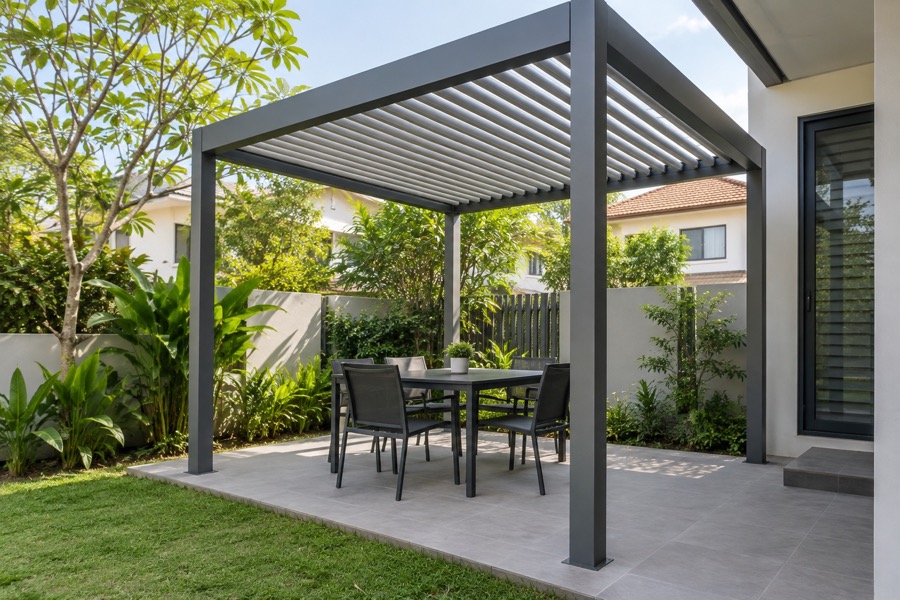
Garden louvre shade structure
Care and Day-to-Day Operation
Understand the installed system before using it routinely. The handover should clarify the controls, permitted movement and the recommended operating position in different conditions. Follow the product-specific instructions rather than applying care advice intended for fabric awnings or a fixed roof.
- Keep the moving elements clear of branches, hanging items and other obstructions.
- Use the controls as instructed and avoid repeated operation if the mechanism becomes obstructed.
- Check accessible surfaces for debris without climbing onto the structure.
- Use the recommended cleaning method for the louvre and frame finishes.
- Do not attempt adjustments to motors, electrical connections or concealed mechanisms yourself.
- Arrange an assessment if movement changes, unusual sounds occur or visible components become damaged.
Keep the product details and operating guidance together for future reference. If you are comparing a louvre proposal with another shading system, ask for the differences in coverage, controls and maintenance to be explained clearly. This helps you choose on the basis of how the outdoor area will be used, with realistic expectations about the selected installation.
Before selecting the installation, review BCA’s building-work approval guidance and seek advice for your property. Compare a polycarbonate roof for fixed coverage or motorised retractable awnings for adjustable fabric shade.
Frequently Asked Questions
| Question | Answer |
|---|---|
Should I choose a manual or motorised retractable awning? | Manual awnings use a hand crank; motorised ones use a wall switch or remote. Many customers choose both, with the manual crank as backup if the motor fails. |
How much clearance does a retractable awning need? | At least six inches of horizontal space, and around seven feet of vertical clearance if installed at a steeper pitch. |
Do retractable awnings need ground support poles? | No, the retractable arms keep the fabric tensioned without needing poles or columns underneath. |
What's the difference between steel and aluminium torsion bars? | Steel torsion bars are generally stronger and can support wider fabric spans without centre support, compared to aluminium. |
How should I maintain my retractable awning? | Roll it up in stormy weather, avoid pooling water or hanging objects on it, clean powder-coated parts twice a year, lubricate moving parts annually, and never use bleach or strong detergents on the fabric. |