
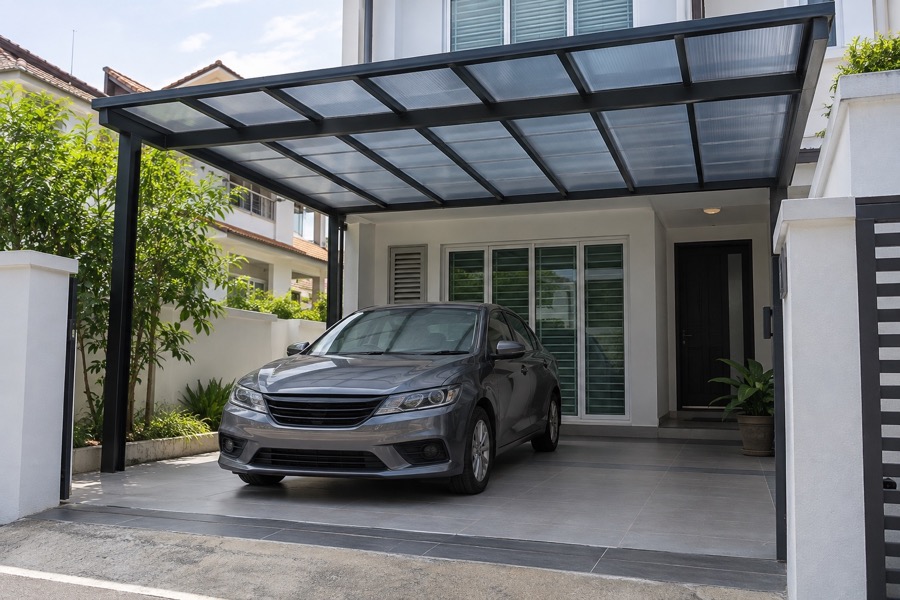
Polycarbonate car porch shelter
A car porch shelter should provide useful coverage while keeping the entrance easy to use. The design needs to account for vehicles, pedestrian movement and the relationship between the porch and the home. Ace Awnings provides shade and roofing solutions in Singapore, including polycarbonate roofing for car porch applications.
With 15 years of experience in the awning industry, we help homeowners consider the practical requirements of the space before choosing a system. Dimensions, available support and the amount of daylight you want beneath the roof all influence the proposal.
Whether you are planning new coverage or reviewing the suitability of an existing porch arrangement, a site assessment helps establish a clear scope. The aim is to create useful shelter that fits the property and supports its everyday use.
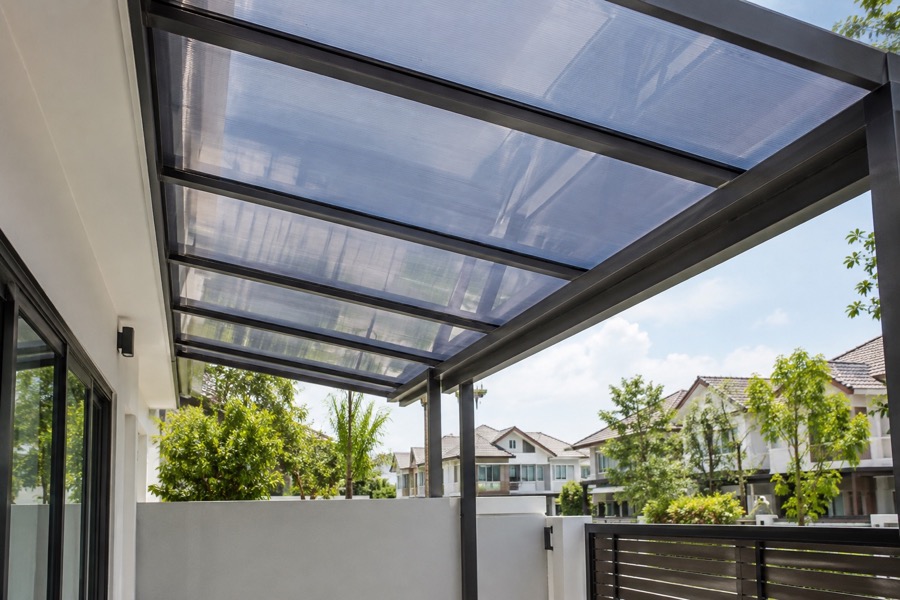
Polycarbonate roof and supporting frame
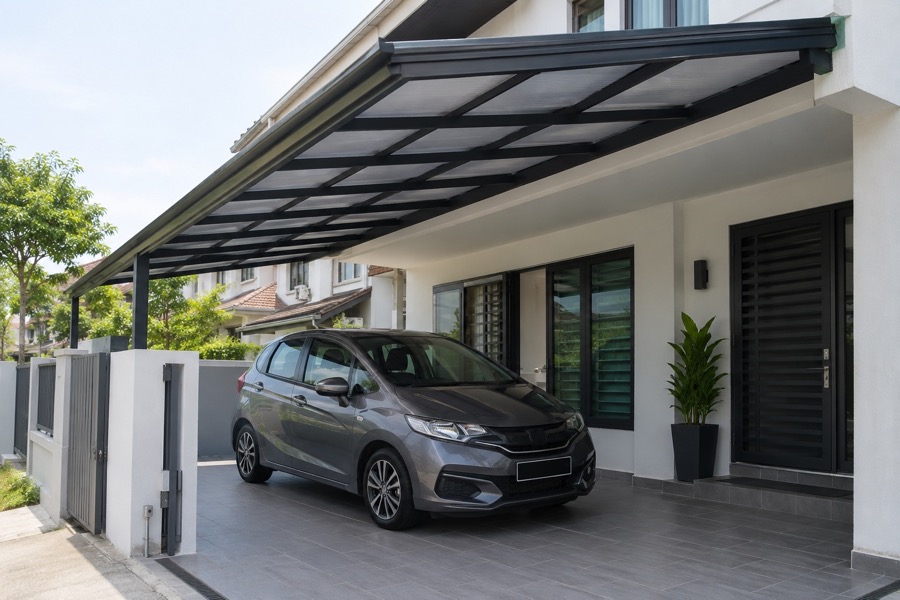
Car porch roof slope and access
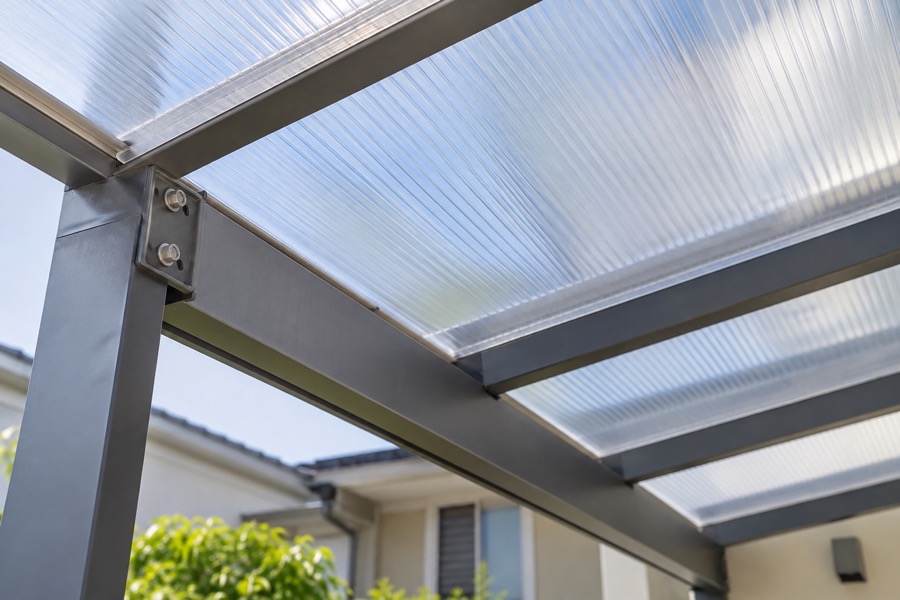
Polycarbonate panel fixings
Planning Useful Porch Coverage
Start with where vehicles normally park and how people enter the home. The shelter should be considered around those activities, including room for doors to open and for people to walk past. A roof that appears adequate in plan may provide a different experience when the sun or rain comes from an angle.
Photographs of the driveway, building frontage and surrounding roof lines help explain the site. Discuss whether you need coverage primarily for a parked vehicle, the approach to the front door or both. These needs can affect the preferred roof position and dimensions. Avoid choosing the size solely from a vehicle measurement without considering the space around it.
Polycarbonate Roofing and Daylight
Polycarbonate roofing is one option for a porch where daylight beneath the shelter is important. The selected sheet and tint affect the appearance of the covered area. Ask about the available product, its stated properties and the balance between shade and light transmission rather than assuming all polycarbonate panels perform identically.
Consider nearby windows as well as the porch itself. Coverage may change the amount of light reaching adjacent rooms, and your preferences should be discussed before material selection. The proposal should identify the panel type and finish so the quotation describes the actual roof being supplied. A sample can help you understand the intended appearance.
Clearance, Support and Drainage
Vehicle clearance is a practical design consideration. Tell us if you use a taller vehicle or expect to change vehicles, and identify gates or other moving fittings near the proposed roof. The supporting frame should be assessed around the available fixing positions and how you need to move through the porch.
Drainage should be part of the roof discussion from the beginning. Roof slope, edges and the relationship with existing drainage influence how water leaves the covered area. Confirm which drainage-related components are included in the quotation. A porch shelter should not be presented as a remedy for unrelated building leaks without a separate assessment.
Choosing and Confirming the Installation
A fixed roof and a retractable awning serve different purposes. Fixed coverage can suit a regularly used porch, while adjustable fabric shade has its own operating limitations. Folding-arm awnings should be retracted when stormy conditions are anticipated. Discuss the actual protection needed before selecting the system.
During the site survey, explain your vehicle arrangement, desired coverage and appearance preferences. Confirm the supporting structure, roofing product, access and installation scope. Any applicable property or building requirements should be established for the particular project; a shelter proposal should not assume that every porch alteration has the same approval position.
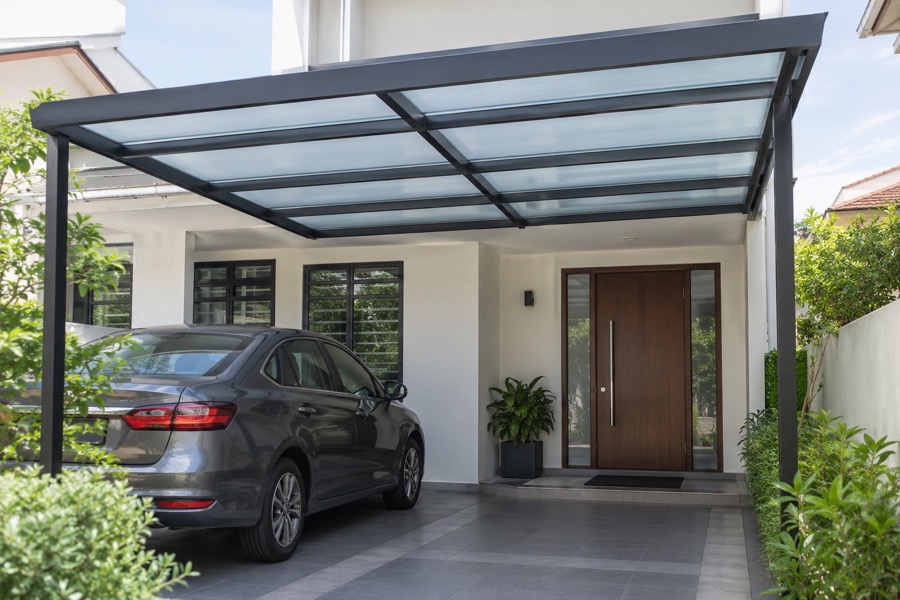
Sheltered porch walkway
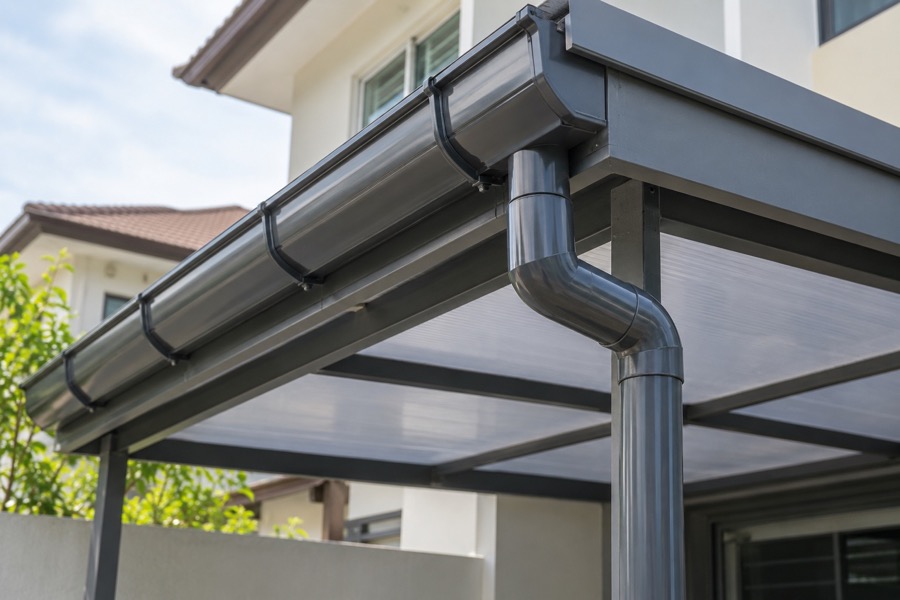
Porch roof gutter and downpipe
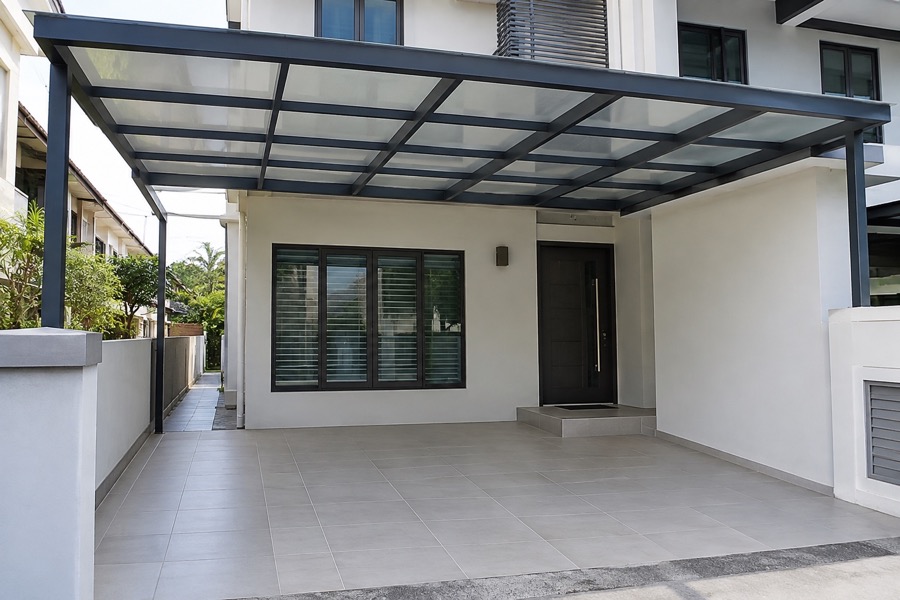
Covered car porch clearance
Keeping a Porch Shelter in Good Condition
Outdoor roofing benefits from sensible care and occasional attention to its condition. Follow the cleaning guidance for the supplied panels and frame finish. Safe access matters, so avoid climbing onto the roof or leaning ladders against parts that are not intended to carry those loads.
- Check the shelter from ground level for loose debris or visible damage.
- Keep drainage routes clear through suitable, safe maintenance arrangements.
- Use the recommended cleaning method and avoid abrasive tools on the panels.
- Do not suspend storage, lights or other items from the structure without confirming suitability.
- Arrange an assessment if panels become damaged or connections appear loose.
- Report signs of leakage with photographs showing where and when the water enters.
For an estimate, send the approximate porch dimensions and photographs showing the frontage and parking area. Mention any access constraints and the coverage you are hoping to achieve. This gives us a useful starting point for consultation and helps ensure the proposed shelter reflects the way you actually use the space.
Check URA’s guidance for renovating landed residential properties when planning a porch shelter. The polycarbonate roof page explains material considerations, while patio and garden shade covers adjacent outdoor living areas.
Frequently Asked Questions
| Question | Answer |
|---|---|
Should I choose a manual or motorised retractable awning? | Manual awnings use a hand crank; motorised ones use a wall switch or remote. Many customers choose both, with the manual crank as backup if the motor fails. |
How much clearance does a retractable awning need? | At least six inches of horizontal space, and around seven feet of vertical clearance if installed at a steeper pitch. |
Do retractable awnings need ground support poles? | No, the retractable arms keep the fabric tensioned without needing poles or columns underneath. |
What's the difference between steel and aluminium torsion bars? | Steel torsion bars are generally stronger and can support wider fabric spans without centre support, compared to aluminium. |
How should I maintain my retractable awning? | Roll it up in stormy weather, avoid pooling water or hanging objects on it, clean powder-coated parts twice a year, lubricate moving parts annually, and never use bleach or strong detergents on the fabric. |