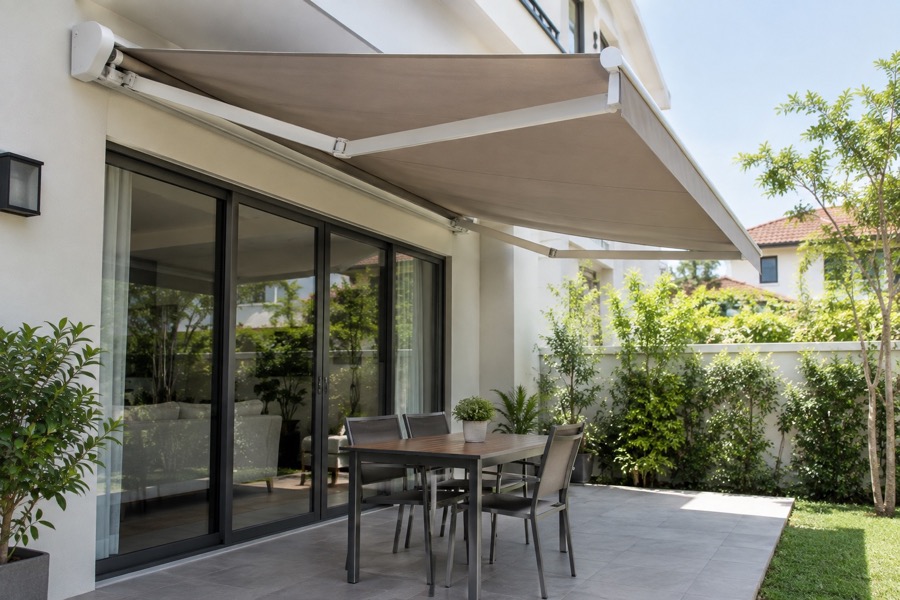
Extended motorised retractable awning
A motorised retractable awning makes it convenient to adjust outdoor shade using a wall switch or remote control. You can extend the fabric when shade is needed and retract it when you want the space open. Ace Awnings supplies manual and motorised retractable awning solutions in Singapore.
With 15 years of experience in the awning industry, we help property owners consider the operating arrangement alongside coverage, mounting and everyday use. Motorised operation can be useful where the awning is adjusted frequently or a manual crank would be less convenient.
The right installation depends on the system and site. We discuss the available controls, power provision and fabric options before the proposal is finalised, so that you understand how the awning will work and the conditions in which it should be used.
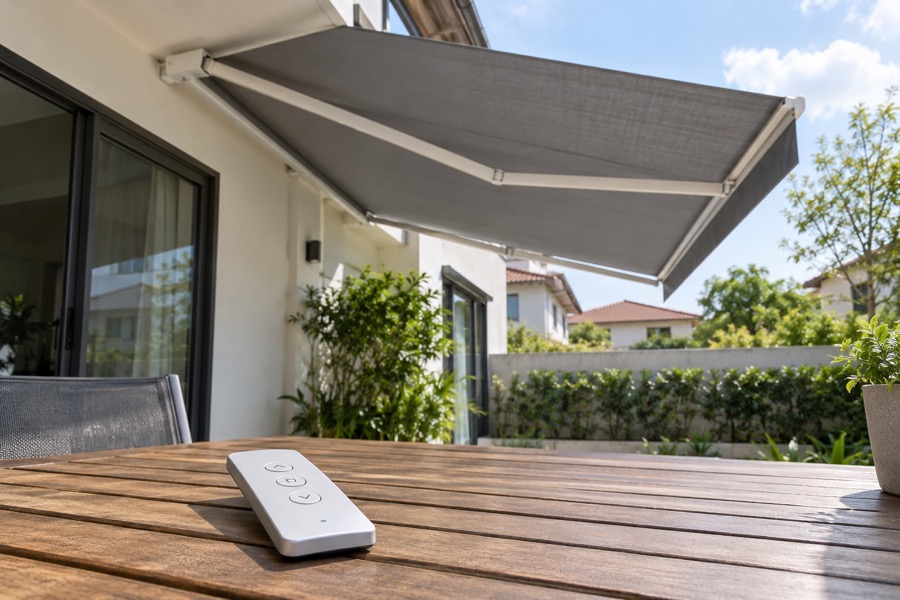
Awning remote control
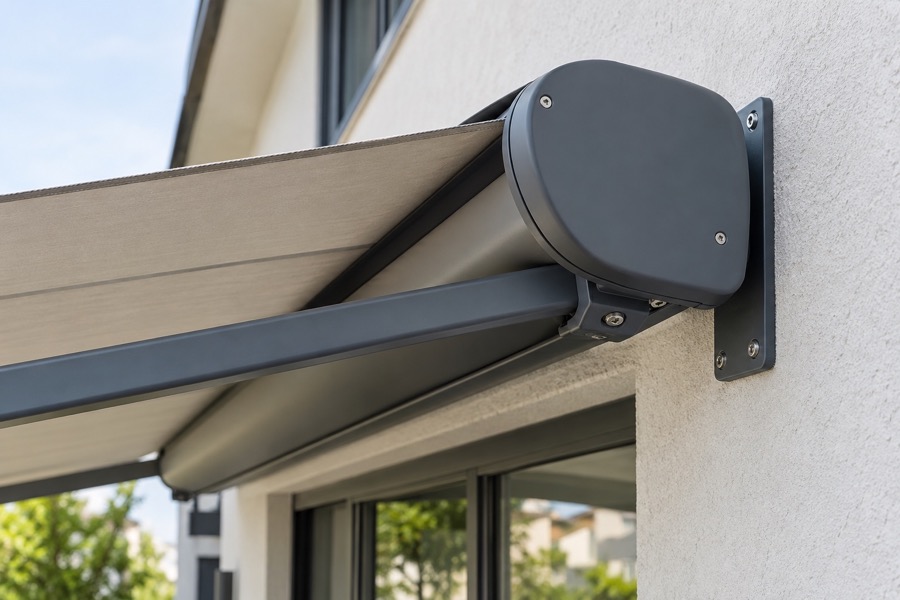
Awning motor-end housing
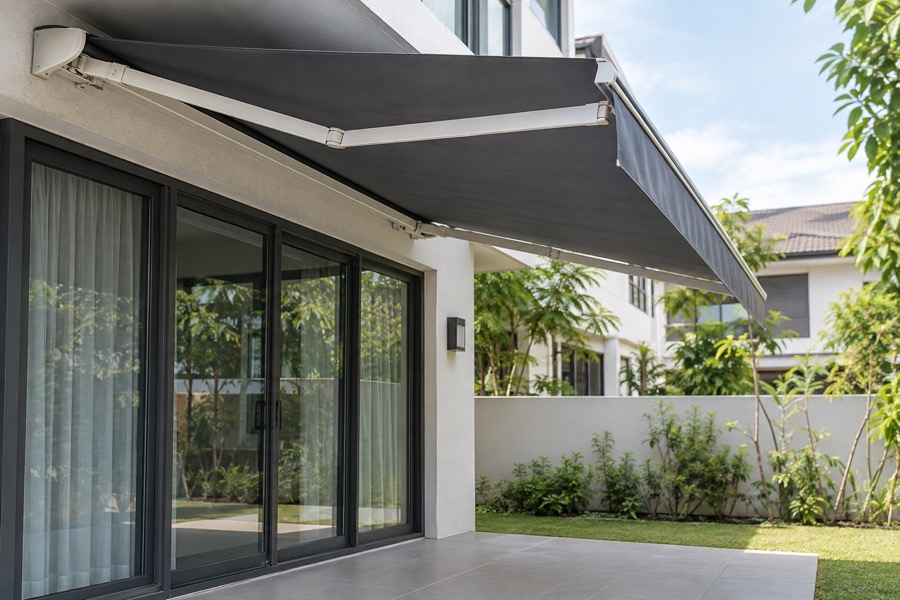
Partially extended awning
Convenient Control of Outdoor Shade
Motorised operation changes how you extend and retract the awning; it does not change the need to use the shade appropriately. Consider who will operate the system and how often it will move during the day. A control arrangement that suits a home patio may differ from one used by staff at a commercial frontage.
The controls should remain accessible and easy to understand. Discuss whether the selected product uses a wall switch, remote or another specified arrangement. Automatic sensors and smart-home connections should only be expected if they are explicitly part of the supplied system. Clear instructions help every user operate the awning consistently.
Power and Manual Backup
Power provision needs to be considered before installation. Confirm what the selected motor requires and which associated electrical arrangements are included in the quotation. The location of the system and controls should be discussed together so that operation remains practical once the awning is fitted.
Ace’s retractable-awning range includes manual and motorised options. A manual backup can be considered where the chosen system supports it, allowing an alternative operating method if the motor or power supply is unavailable. Compatibility should be confirmed for the actual product. Do not assume that every motorised awning automatically includes a crank or the same backup procedure.
Coverage, Mounting and Fabric
Choose the awning around the area you want to shade, not just the motorised feature. The width, projection and available fixing surface affect the proposal. Nearby doors, windows and other fittings must be considered, together with the clearance needed for movement. A site survey helps identify a suitable arrangement for the property.
Lateral-arm awnings keep the fabric extended without support poles beneath the shaded area. Their supporting components and mounting still need to suit the selected size and site. Fabric colour and shade characteristics should be discussed alongside the structure. Our main Retractable Awning page explains the broader system and design choices.
Weather Use and Project Planning
Folding-arm fabric awnings are intended as sun shelter in calm conditions. Retract them before stormy weather and avoid allowing water to pool on the fabric. A motor makes retraction convenient, but it should not be taken as evidence that the awning can remain open in every weather condition.
For an estimate, provide photographs of the mounting area, approximate coverage dimensions and your preferred control method. Describe how the outdoor space is used and any access restrictions. Confirm the product, fabric, controls, power-related scope and operating instructions before proceeding. This allows the proposal to address both convenient use and a suitable installation.
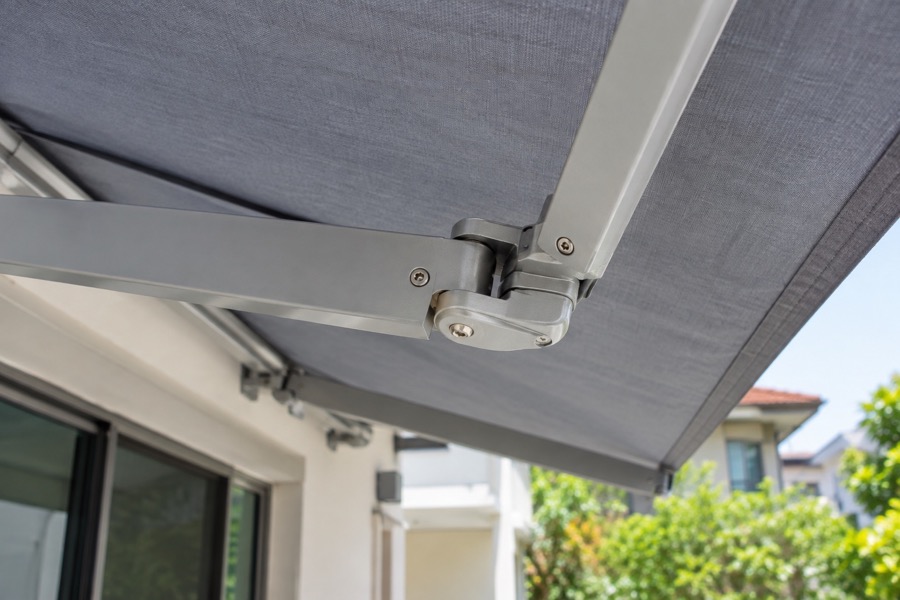
Retractable awning arm joint
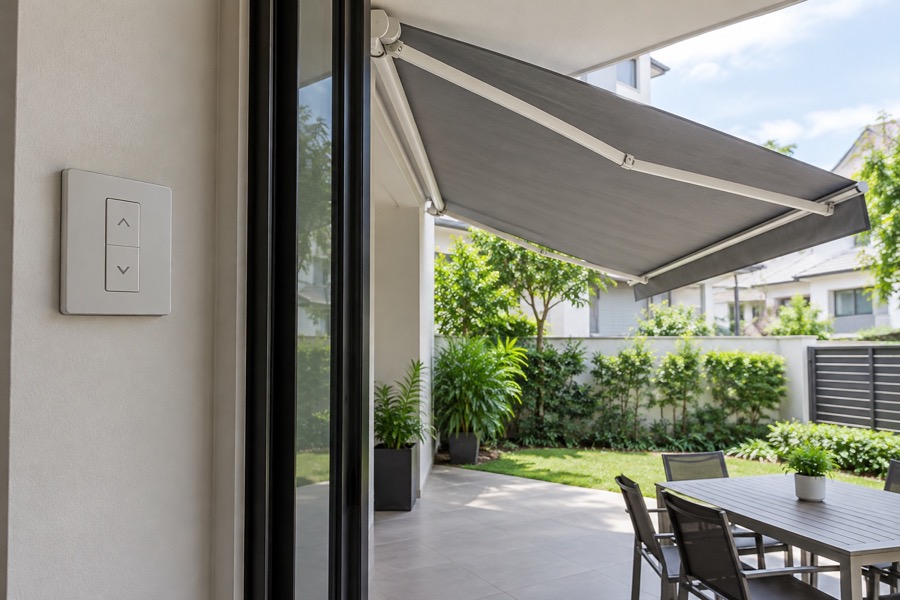
Awning wall switch
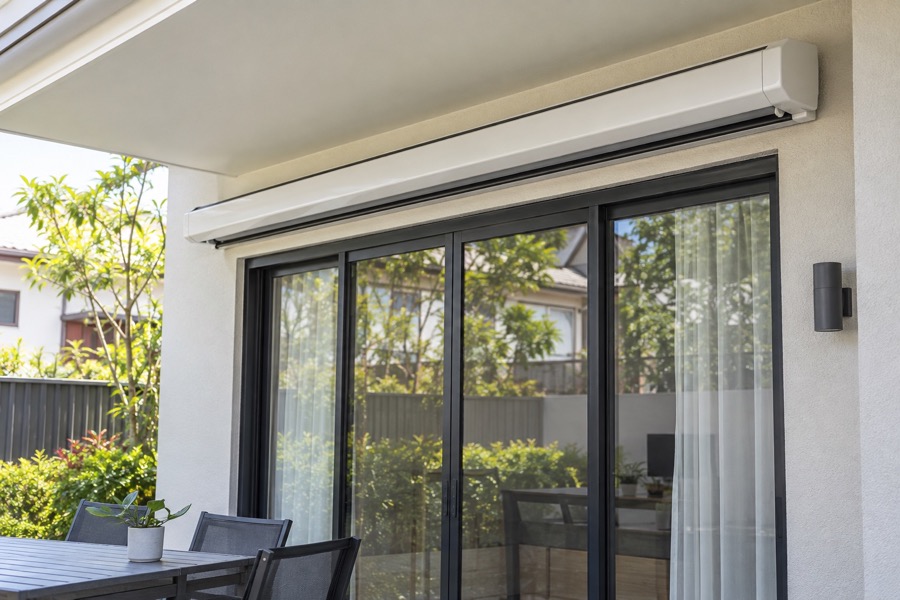
Retracted awning housing
Care for a Motorised Awning
Keep the supplied instructions available and use the system as demonstrated. Motorised movement should be smooth and unobstructed. If the awning catches, stops unexpectedly or moves unevenly, avoid repeated attempts to force operation and arrange an assessment of the issue.
- Keep the operating area clear of branches, furniture and other obstructions.
- Retract the awning when stormy conditions are anticipated.
- Remove loose debris before rolling up the fabric and prevent water pooling.
- Do not attach or suspend additional loads from the fabric or frame.
- Follow cleaning guidance for the cover and powder-coated components.
- Do not open motors or alter electrical connections yourself.
If manual backup is fitted, understand the correct procedure before it is needed. Keep the relevant product information and any service records together. When requesting advice, describe the response to the controls and any change in movement. This helps identify whether the concern relates to operation, the mechanism or another part of the installation.
Review MSS’s weather systems guide when planning outdoor use; control convenience does not remove the need to follow operating limits. Compare manual and motorised retractable awnings and arrange an awning repair assessment if an existing mechanism develops faults.
Frequently Asked Questions
| Question | Answer |
|---|---|
Should I choose a manual or motorised retractable awning? | Manual awnings use a hand crank; motorised ones use a wall switch or remote. Many customers choose both, with the manual crank as backup if the motor fails. |
How much clearance does a retractable awning need? | At least six inches of horizontal space, and around seven feet of vertical clearance if installed at a steeper pitch. |
Do retractable awnings need ground support poles? | No, the retractable arms keep the fabric tensioned without needing poles or columns underneath. |
What's the difference between steel and aluminium torsion bars? | Steel torsion bars are generally stronger and can support wider fabric spans without centre support, compared to aluminium. |
How should I maintain my retractable awning? | Roll it up in stormy weather, avoid pooling water or hanging objects on it, clean powder-coated parts twice a year, lubricate moving parts annually, and never use bleach or strong detergents on the fabric. |