
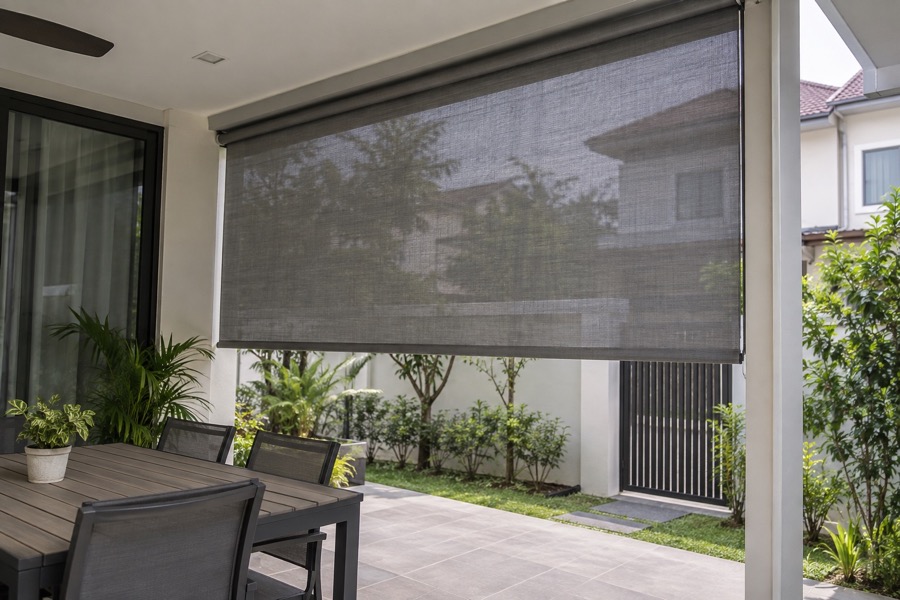
Patio outdoor roller blind
Outdoor roller blinds add vertical shade where an overhead awning or roof cannot address low-angle sunlight and glare on its own. They can help make balconies, patios and other semi-outdoor areas more comfortable while allowing you to adjust how open the space feels. Ace Awnings provides outdoor shading solutions in Singapore, supported by 15 years of awning-industry experience.
The appropriate blind depends on the opening, exposure and the balance you want between shade, privacy and visibility. A screened sitting area has different needs from a sheltered passage or an outdoor business frontage.
We discuss the fabric and operating options in relation to the actual site. The aim is to select a practical shade for your space, with clear expectations about its use, care and limitations in changing weather.
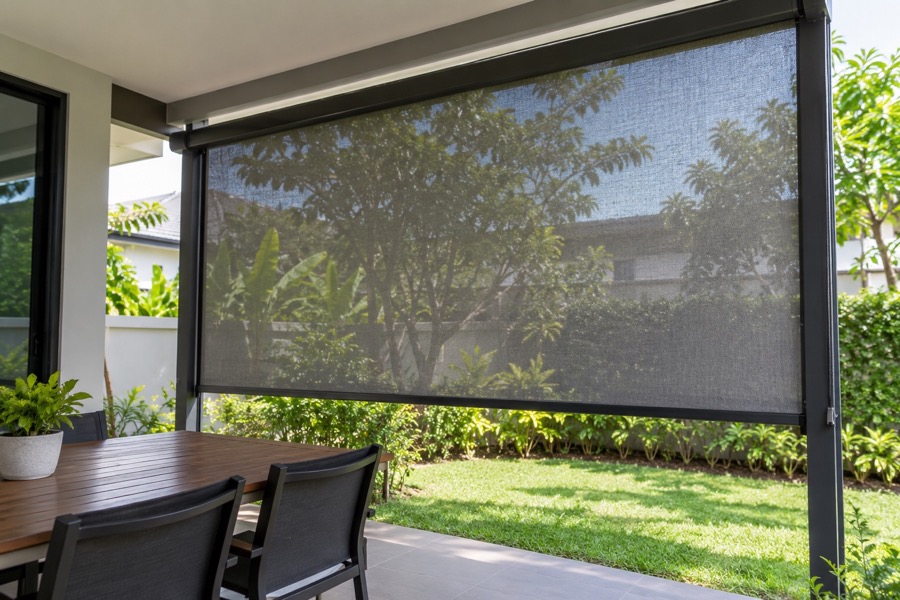
Garden-facing sunscreen blind
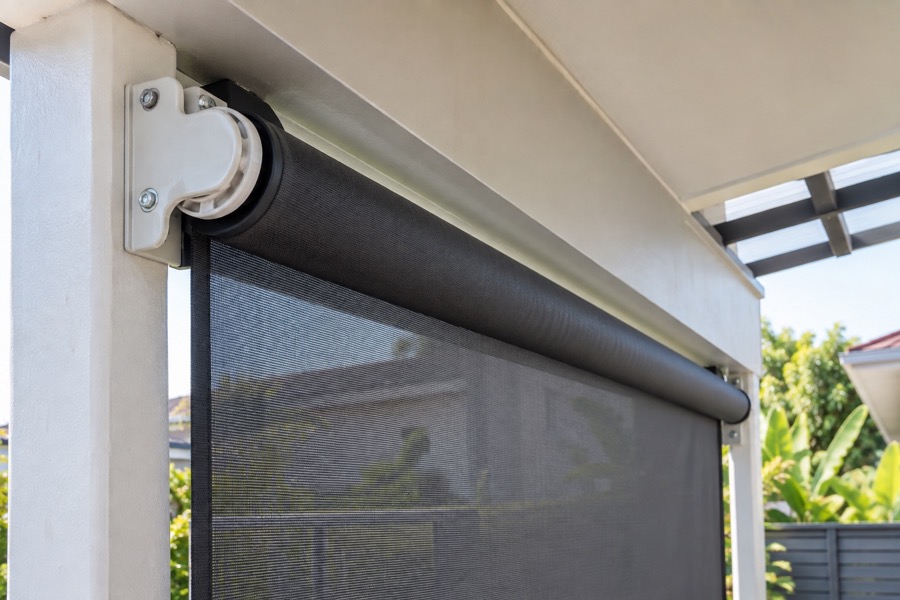
Outdoor blind roller and brackets
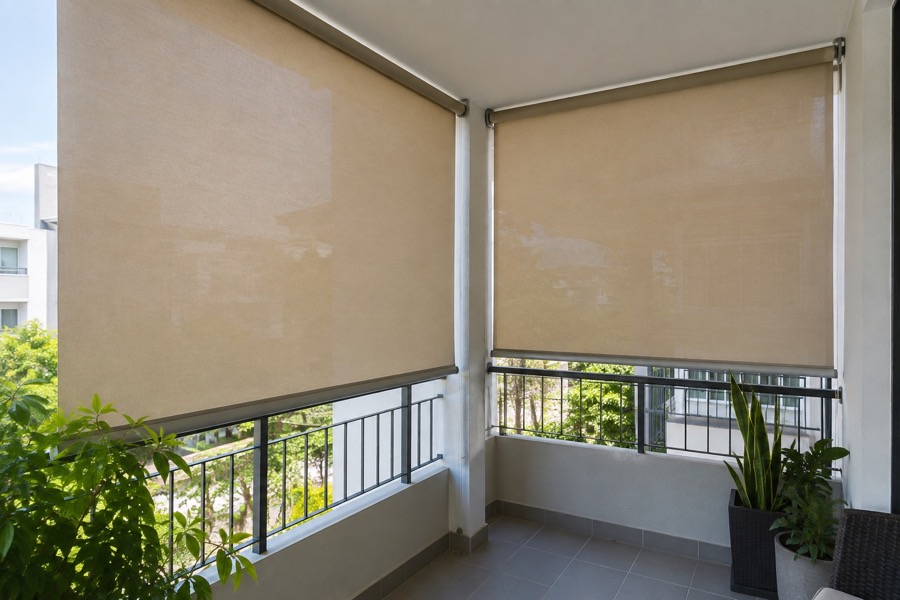
Balcony roller shades
Vertical Shade for Outdoor Spaces
Overhead coverage is useful, but sunlight may still enter from the side at different times of day. An outdoor roller blind addresses this vertical opening. It can be lowered when shade or privacy is needed and raised when you want a more open outlook. Consider the direction of sunlight and the places where you usually sit or work before selecting the coverage.
Outdoor blinds should be planned around the structure already in place. Roof beams, wall positions and opening sizes affect where a blind can be mounted. The site also determines how much of the opening can be covered and whether the fabric has a suitable path of movement. An indoor roller blind should not automatically be treated as appropriate for an exposed outdoor position.
Fabric, Light and Privacy
Fabric selection affects the feel of the shaded area. More open materials can preserve a sense of connection with the surroundings, while denser fabrics provide a different level of screening. Discuss the actual outdoor-suitable range with Ace rather than choosing solely from a colour sample. Exposure, cleaning requirements and the intended use all matter.
Privacy also changes with lighting conditions. A fabric that gives useful daytime screening may not provide the same result when the area behind it is brightly lit. Explain whether your main concern is afternoon glare, visibility from neighbouring properties or comfort while dining outdoors. This helps us discuss a suitable fabric without assuming that every blind gives complete privacy.
Operating and Mounting Options
The control arrangement should suit how often you will raise or lower the blind and who will use it. Ace offers manual and motorised roller-blind options; the appropriate outdoor arrangement should be confirmed for the selected system. Discuss accessibility, control positions and any power provision before finalising a motorised installation.
Mounting details depend on the opening and the supporting surface. Keep the blind’s travel clear of furniture, handles and other fittings. Ask which guiding or restraint arrangements are included in the proposed system. Outdoor roller blinds and track-guided zip blinds are different configurations, so any track system must be identified specifically in the quotation.
Combining Blinds with Overhead Shade
An outdoor blind can complement an existing polycarbonate roof or canopy, where the supporting structure and site conditions permit. The overhead system and vertical shade should be considered together so that movement and access remain practical. Neither component should be assumed to turn an outdoor space into a fully enclosed room.
For an estimate, provide photographs of the opening and surrounding structure, approximate width and height, and the times when sunlight is most troublesome. Identify whether the area is sheltered or directly exposed. These details help the site assessment focus on the right fabric, coverage and installation scope.
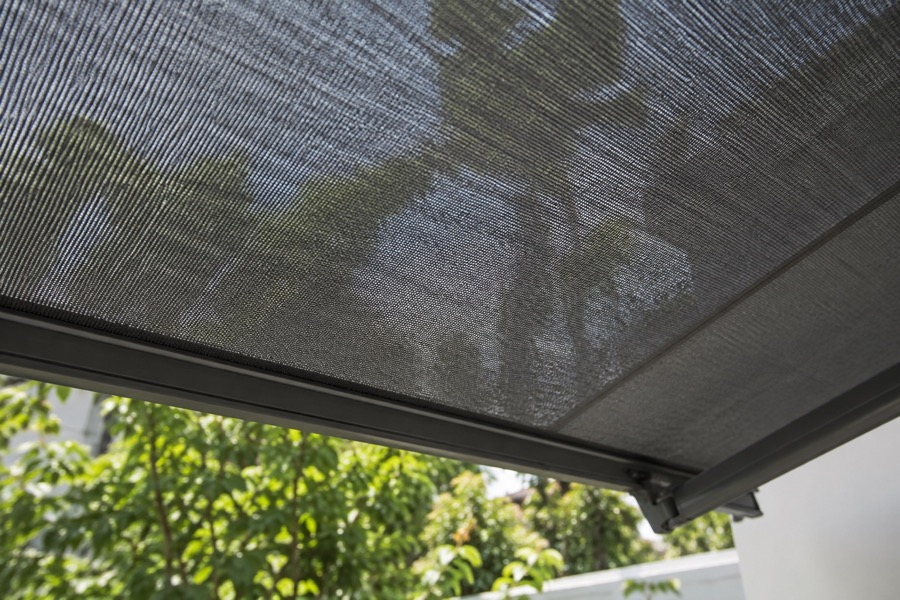
Outdoor sunscreen fabric
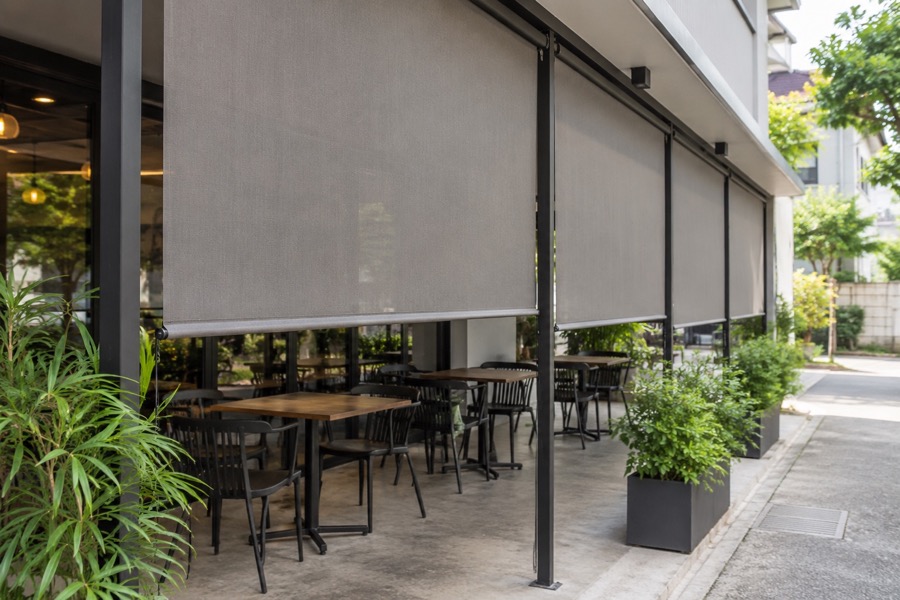
Commercial outdoor roller blinds
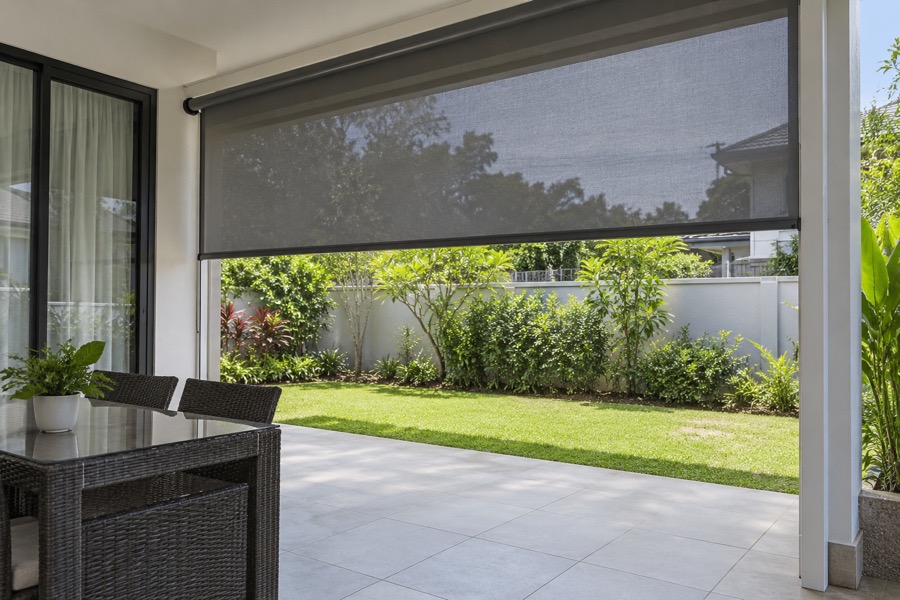
Raised patio roller blind
Using and Caring for Outdoor Blinds
Outdoor exposure varies from one property to another. Follow the instructions supplied for your installed blind, including guidance on wind and rain. Avoid assuming that a lowered blind provides complete weather exclusion or that every system can remain deployed in all conditions.
- Keep the fabric’s travel clear and check that nearby furniture does not interfere with operation.
- Remove loose debris carefully and use the cleaning method recommended for the fabric.
- Do not apply harsh chemicals or scrub the material without suitable manufacturer guidance.
- Avoid forcing a blind that catches, travels unevenly or becomes difficult to operate.
- Keep controls accessible and ensure users understand how to raise and lower the shade.
- Arrange an assessment if brackets, fabric or operating components show damage.
Before confirming an installation, check the supplied fabric, operating method, mounting arrangements and care requirements in the quotation. If your needs are primarily indoors, our Roller Blinds page explains the broader window-covering range. Separating the two applications helps you choose a system suited to its intended position.
For strata properties, check URA’s guidance on planning exemptions and screening against the proposed installation and management requirements. For indoor windows, compare roller blinds; overhead sun may also call for patio shade planning.
Frequently Asked Questions
| Question | Answer |
|---|---|
Should I choose a manual or motorised retractable awning? | Manual awnings use a hand crank; motorised ones use a wall switch or remote. Many customers choose both, with the manual crank as backup if the motor fails. |
How much clearance does a retractable awning need? | At least six inches of horizontal space, and around seven feet of vertical clearance if installed at a steeper pitch. |
Do retractable awnings need ground support poles? | No, the retractable arms keep the fabric tensioned without needing poles or columns underneath. |
What's the difference between steel and aluminium torsion bars? | Steel torsion bars are generally stronger and can support wider fabric spans without centre support, compared to aluminium. |
How should I maintain my retractable awning? | Roll it up in stormy weather, avoid pooling water or hanging objects on it, clean powder-coated parts twice a year, lubricate moving parts annually, and never use bleach or strong detergents on the fabric. |