Replacement awning fabric
Replacing an awning’s fabric can refresh its appearance and shade coverage when the existing structure remains suitable. A faded, torn or deteriorated cover does not always mean the complete awning must be replaced, but the frame and mechanism need to be considered before new material is fitted.
Ace Awnings provides awning fabric replacement in Singapore, supported by 15 years of experience in the awning industry. We discuss the existing system, the condition of the cover and your preferences for the replacement fabric.
The aim is to match the new material to the actual installation and intended use. Fabric colour, dimensions and suitability matter alongside the appearance you want. An assessment helps establish whether re-covering is a practical option and what work should be included in the proposal.
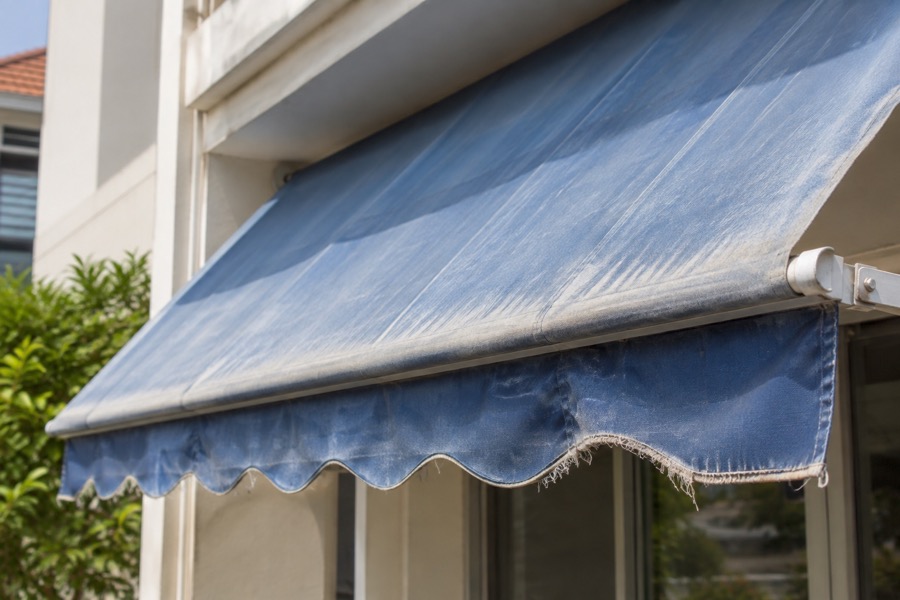
Worn awning valance
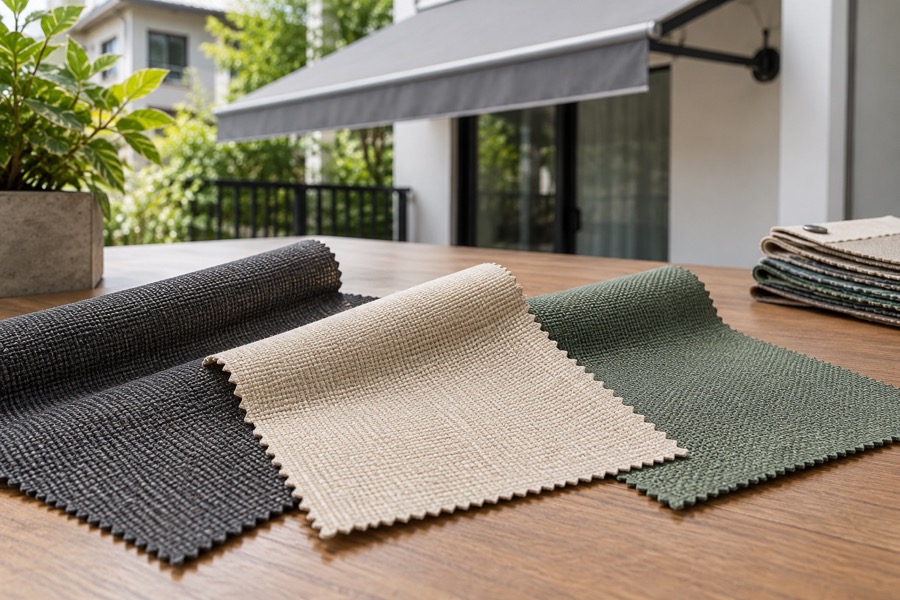
Outdoor fabric colour swatches
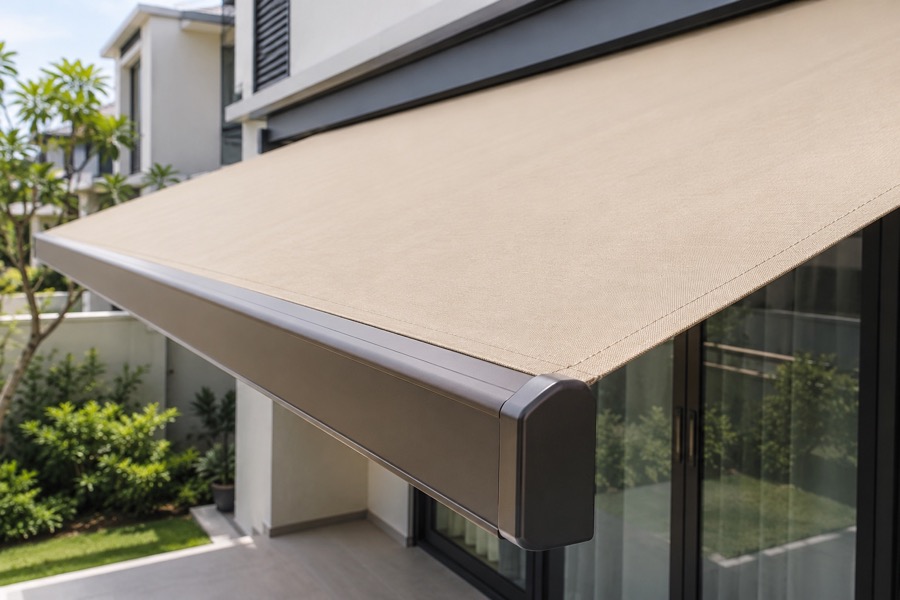
New fabric and front rail
When a New Cover May Be Appropriate
Fabric exposed outdoors can change in appearance and condition over time. Persistent staining, tears, fraying or deterioration may lead you to consider replacement. Start by explaining what concerns you about the current cover and whether the awning still operates normally. Photographs of both the full system and the affected material are useful for an enquiry.
Replacement should not be selected purely because the old fabric looks worn. The supporting frame, arms and operating mechanism need to be suitable for reuse. If the system also develops uneven movement or unusual noise, mention those issues at the outset. Fabric work and mechanical repairs are different parts of the scope and should be discussed together where necessary.
Choosing the Replacement Fabric
Think about the shade, light and appearance you want from the renewed awning. Fabric colour can change the character of an outdoor area, while the material’s stated properties and care requirements affect how it should be used. Ace offers customised fabric choices; the appropriate replacement must be confirmed for your particular system.
Different fabric descriptions should not be treated as interchangeable. Discuss the available materials, intended outdoor application and cleaning guidance before making a decision. Ask for the selected product to be identified in the quotation. If the awning forms part of a business frontage, any proposed name or branding treatment should also be confirmed before production.
Checking Fit and Existing Components
The new cover needs to fit the existing awning’s dimensions and attachment arrangement. Measurements should account for the actual system rather than only the visible shaded area. A cover that looks similar to another installation may still have different fitting requirements. Confirm whether any associated fabric sections are included in the replacement.
The assessment should also consider whether components need attention before the fabric is renewed. New material does not correct an unsuitable mounting surface or a worn mechanism. Where more extensive work is necessary, compare the proposed repair and re-covering scope with a new retractable awning installation before deciding how to proceed.
Planning the Replacement Work
Share photographs, approximate dimensions and any available installation or product records. Describe whether the awning is manual or motorised and identify any operating issues. Mention access restrictions around the work area. These details help us discuss the assessment and establish which replacement options are practical for the existing system.
Before confirming the quotation, check the fabric specification, colour, measurement scope and components included. Agree how the renewed awning will be checked and what care instructions will apply. Any additional repair work should be described clearly rather than assumed to be part of a fabric-only replacement. This keeps the proposal aligned with the condition of your installation.
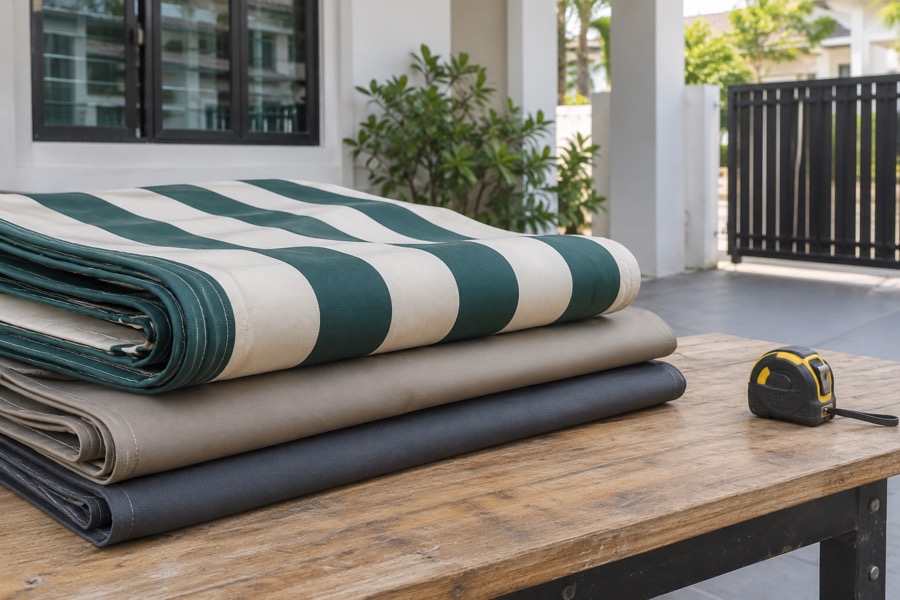
Awning fabric on workbench
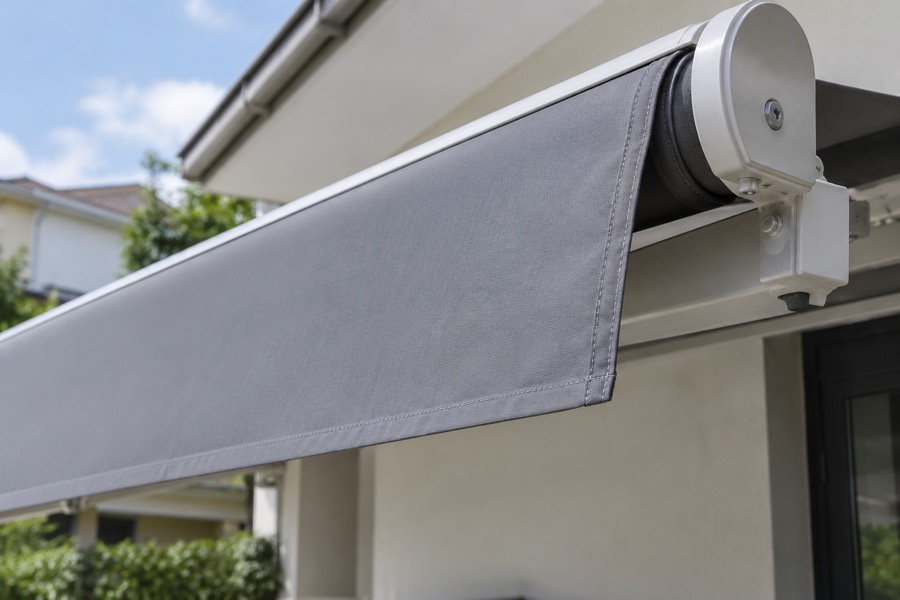
Fabric attachment at roller
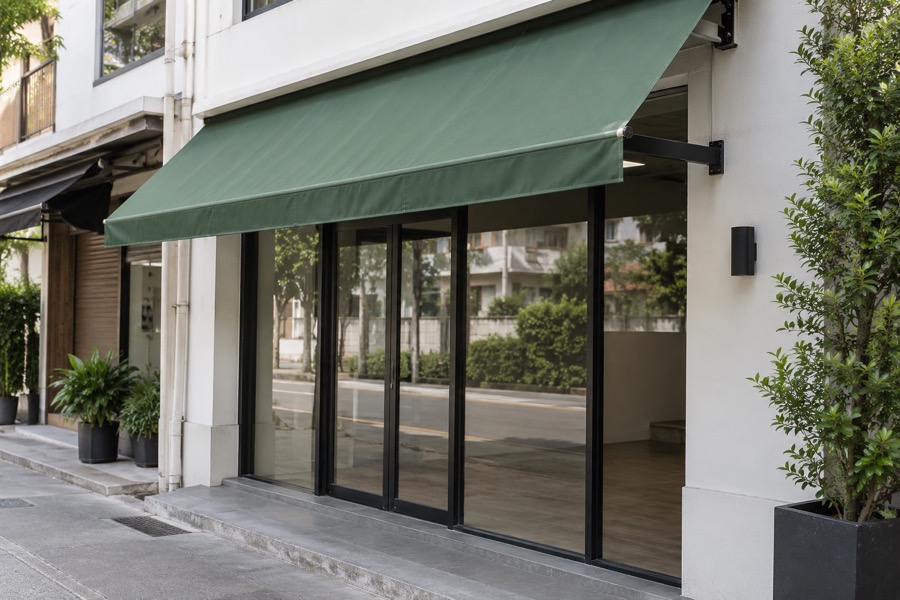
Renewed shopfront canopy fabric
Caring for the Replacement Fabric
A renewed cover should be used and cleaned according to the instructions for its particular material. Advice for an old fabric may not apply to the replacement. Keep the product details available so future cleaning and maintenance decisions can be based on the material actually fitted.
- Brush away loose debris gently using an appropriate method for the fabric.
- Remove leaves and organic deposits before rolling up a retractable awning.
- Avoid strong chemicals, abrasive tools and improvised stain treatments.
- Do not hang objects from the cover or allow water to collect on it.
- Retract folding-arm awnings when stormy conditions are anticipated.
- Arrange an assessment if the cover tracks unevenly or the mechanism becomes difficult to operate.
For a replacement estimate, explain whether your priority is restoring the existing appearance or choosing a different colour and shade effect. Include the condition of the operating system in your enquiry. This helps us discuss the complete situation rather than selecting fabric without considering the awning it will be fitted to.
Assess the cover alongside its structure; the awning repair page explains why operating faults need separate consideration. See outdoor canopy fabric options for related material choices. Consult MSS’s local weather guide when planning outdoor shade use around thunderstorms.
Frequently Asked Questions
| Question | Answer |
|---|---|
Should I choose a manual or motorised retractable awning? | Manual awnings use a hand crank; motorised ones use a wall switch or remote. Many customers choose both, with the manual crank as backup if the motor fails. |
How much clearance does a retractable awning need? | At least six inches of horizontal space, and around seven feet of vertical clearance if installed at a steeper pitch. |
Do retractable awnings need ground support poles? | No, the retractable arms keep the fabric tensioned without needing poles or columns underneath. |
What's the difference between steel and aluminium torsion bars? | Steel torsion bars are generally stronger and can support wider fabric spans without centre support, compared to aluminium. |
How should I maintain my retractable awning? | Roll it up in stormy weather, avoid pooling water or hanging objects on it, clean powder-coated parts twice a year, lubricate moving parts annually, and never use bleach or strong detergents on the fabric. |